
![Likutei Amarim [Tanya], Part I: Sefer Shel Beinonim, with Part II: Shaar HaYichud VehaEmunah, by R. Shneur Zalman of Liadi,](https://files.kedem-auctions.com/files/Sale106/13_1.jpg "Likutei Amarim (Tanya) – First Edition – Slavita, 1796 – Complete Scho")
![Likutei Amarim [Tanya], Part I: Sefer Shel Beinonim, with Part II: Shaar HaYichud VehaEmunah, by R. Shneur Zalman of Liadi,](https://files.kedem-auctions.com/files/Sale106/13_2.jpg "Likutei Amarim (Tanya) – First Edition – Slavita, 1796 – Complete Scho")
![Likutei Amarim [Tanya], Part I: Sefer Shel Beinonim, with Part II: Shaar HaYichud VehaEmunah, by R. Shneur Zalman of Liadi,](https://files.kedem-auctions.com/files/Sale106/13_3.jpg "Likutei Amarim (Tanya) – First Edition – Slavita, 1796 – Complete Scho")
![Likutei Amarim [Tanya], Part I: Sefer Shel Beinonim, with Part II: Shaar HaYichud VehaEmunah, by R. Shneur Zalman of Liadi,](https://files.kedem-auctions.com/files/Sale106/13_4.jpg "Likutei Amarim (Tanya) – First Edition – Slavita, 1796 – Complete Scho")
![Likutei Amarim [Tanya], Part I: Sefer Shel Beinonim, with Part II: Shaar HaYichud VehaEmunah, by R. Shneur Zalman of Liadi,](https://files.kedem-auctions.com/files/Sale106/13_5.jpg "Likutei Amarim (Tanya) – First Edition – Slavita, 1796 – Complete Scho")
![Likutei Amarim [Tanya], Part I: Sefer Shel Beinonim, with Part II: Shaar HaYichud VehaEmunah, by R. Shneur Zalman of Liadi,](https://files.kedem-auctions.com/files/Sale106/13_6-WEB.jpg "Likutei Amarim (Tanya) – First Edition – Slavita, 1796 – Complete Scho")
![Likutei Amarim [Tanya], Part I: Sefer Shel Beinonim, with Part II: Shaar HaYichud VehaEmunah, by R. Shneur Zalman of Liadi,](https://files.kedem-auctions.com/files/Sale106/13_7.jpg "Likutei Amarim (Tanya) – First Edition – Slavita, 1796 – Complete Scho")
Auction 106 Incunabula and First Editions | Illuminated Manuscripts | Jewish Ceremonial Art
Likutei Amarim (Tanya) – First Edition – Slavita, 1796 – Complete Schocken Library Copy, with Wide Margins – Proceeds of Sale Will Be Donated to the Renovation of the Lubavitcher Rebbe's Ohel
Opening: $300,000
Sold for: $375,000
Including buyer's premium
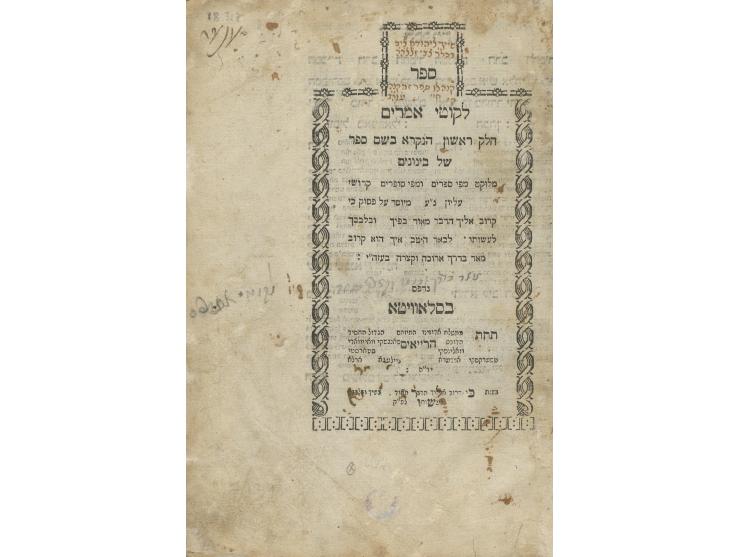
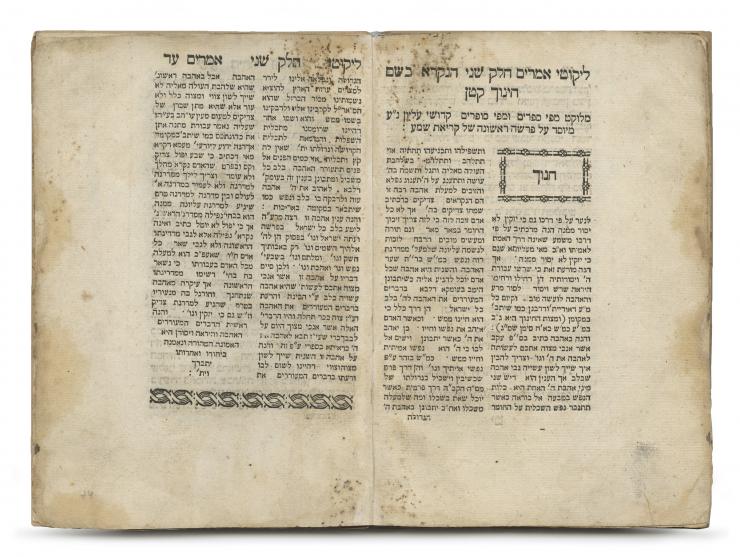
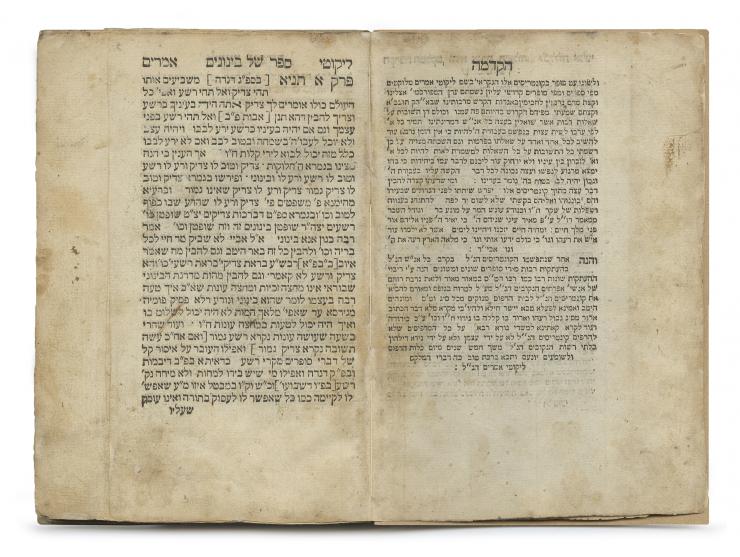
Likutei Amarim [Tanya], Part I: Sefer Shel Beinonim, with Part II: Shaar HaYichud VehaEmunah, by R. Shneur Zalman of Liadi, the Alter Rebbe. Slavita: [R. Moshe Shapira], 1796. First edition, printed in the author's lifetime.
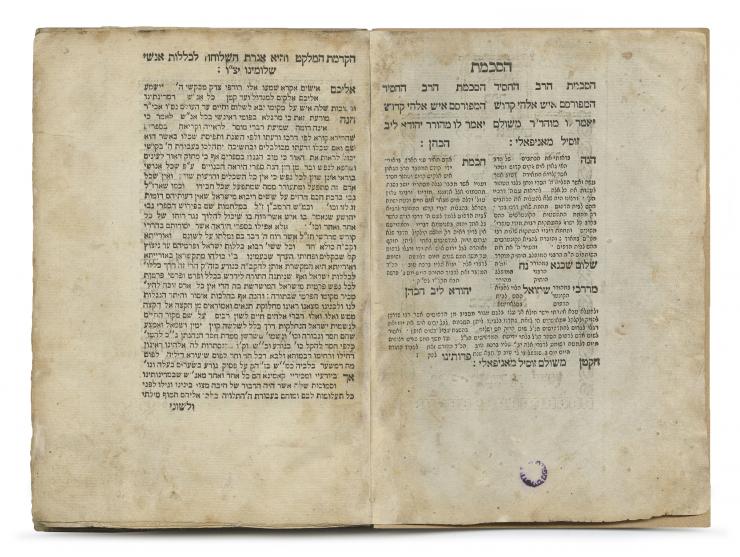
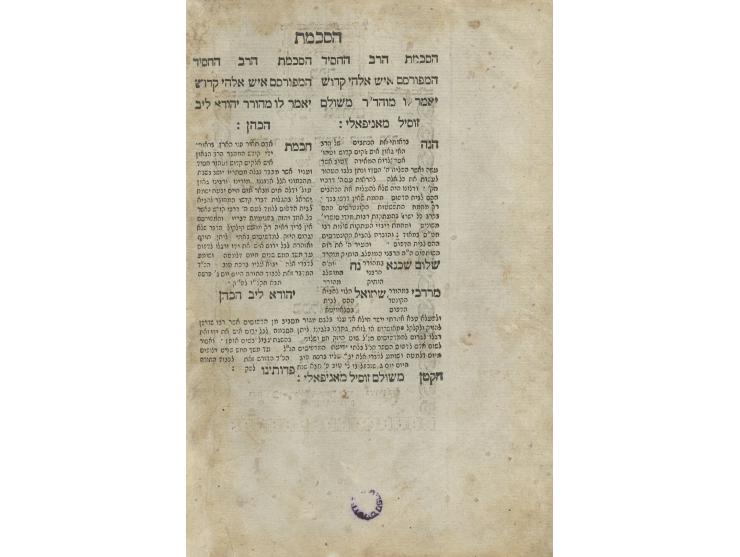
Approbations by two disciples of the Maggid of Mezeritch printed at the beginning of the book – R. Meshulam Zusha of Anipoli and R. Yehudah Leib HaKohen of Anipoli. The author's introduction (a 1795 letter) is printed afterwards.
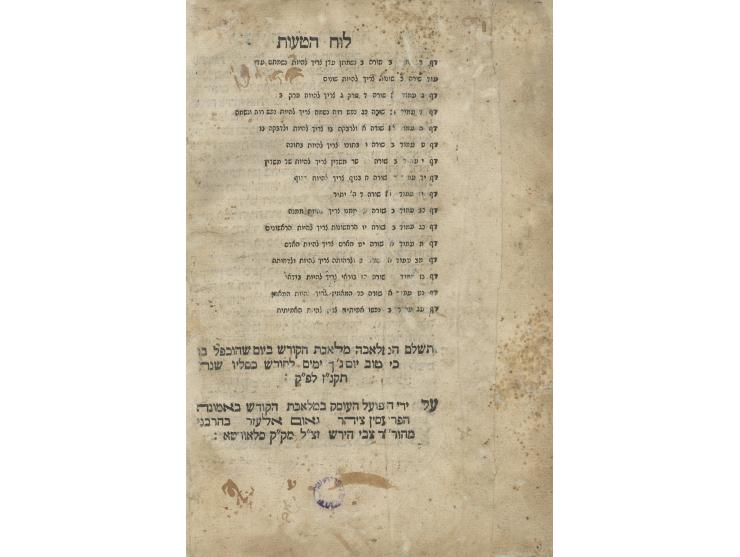
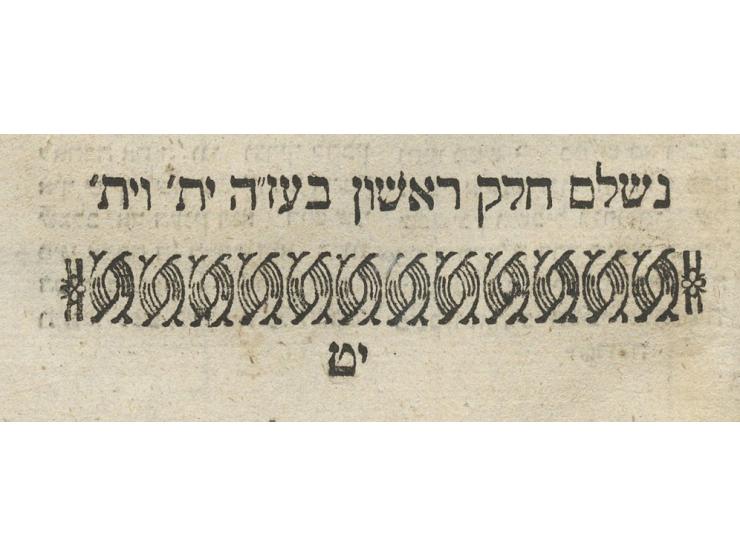
The book was printed anonymously (the author’s name appears neither on the title page nor in the two approbations or the author’s introduction). It was printed over the course of three months: the approbations are dated Tuesday, Ki Tavo, 17th Elul 1796, and the colophon at the end of the book is dated Tuesday, 20th Kislev 1796.
Published by R. Shalom Shachna Altschuler (son-in-law of the Alter Rebbe and father of the Tzemach Tzedek of Lubavitch) and his partner. Variant colophon: the present copy is signed by "the worker… Elazar son of… R. Tzvi Hirsch of Slavita" (other copies are signed by "the typesetter… Avraham Tzvi son of R. Eliezer Katz").
This edition is uniquely valuable as a completely uncensored text, unlike most later editions.
The first edition of this book included only the first two parts: "Part I, called Sefer Shel Beinonim, based on the verse 'For the matter is very close to you, in your mouth and in your heart to perform it', explaining thoroughly how it is very close…" – the elements of service of G-d, and "Part II, called Chinuch Katan [called Shaar HaYichud VehaEmunah on the page headers]… based on the first section of the Shema reading" – the elements of faith in G-d's unity.
Early ownership inscription at top of title page: "Belongs to Yehudah Leib son of R. Tzvi. Who purchases this book acquires the life of the World to Come".
Rare and exceptional copy, in unaltered original condition, untrimmed and unbound. Approximately half of the leaves display especially wide margins (the text was not printed in the center of the sheets; consequently, some leaves retain exceptionally broad margins – in some places nearly half the width of the text column – whereas the others show normal margins).
This book of Tanya is being auctioned from the estate of the noted philanthropist Refael Shlomo Drimmer (1951-2022), a distinguished Chabad Chassid in Brooklyn, and a descendant of R. Shlomo Drimmer, head of the Beit Din of Skala-Podilska, author of Yashresh Yaakov and Responsa Beit Shlomo. Reb Shlomo was famous for his generosity and his many acts of charity, and he supported Torah and charitable institutions open-handedly. He was dedicated to communal work, and promoted peace and reconciliation. He was a follower of the Lubavitcher Rebbe, and served as a member of the central Tomchei Temimim Lubavitch yeshiva administration, and as a council member in the Crown Heights neighborhood. For some three decades, Reb Shlomo collected antique manuscripts and rare and valuable books. At the request of the family, all proceeds from the sale of this Tanya will support a renovation project of the Lubavitcher Rebbe's Ohel.
[3], 4-86 leaves. 19 cm (width of leaves up to 13 cm). Good-fair condition. Stains and wear. Minor defects and tears. Worming to most leaves, affecting text, repaired with paper. Stamps of the Schocken Library in Jerusalem in margins of title leaf and last leaf. New endpapers (sewn on); without binding.
Provenance:
• Schocken Collection, Jerusalem (purchased before May 16, 1946).
• Sotheby's, London, December 1993, Lot 265.
• Judaica Jerusalem, April 2008, Lot 757.
• Estate of Shlomo Drimmer, Brooklyn, New York.
The Main Tanya Editions, Parts Printed During the Author's Lifetime and Posthumously
The first edition of the Tanya printed by the Alter Rebbe in Slavita (Slavuta) contained the first part of the book (53 chapters) and the second part (Chinuch Katan – Shaar HaYichud VehaEmunah, 12 chapters). The title page and page headers name the book Likutei Amarim (later editions would also call it Tanya). This edition bears no traces of censorship.
In 1799 and the first decade of the 1800s, four more editions of the Tanya were printed in Żółkiew, Galicia (present-day Zhovkva, Ukraine), including the first appearance of Part III: the earliest version of Igeret HaTeshuvah. In 1806, the Alter Rebbe printed his book for a second time in Shklow, including the final version of Igeret HaTeshuvah, with improvements in wording, additional explanation and with a division into twelve chapters. This edition contains added approbations by the rabbis of Shklow and Kopust, and is likewise free of censorship.
A year and a half after the passing of the Alter Rebbe, the author's sons printed a third edition of the Tanya (Shklow, 1814), with an additional fourth part called Igeret HaKodesh (32 letters), and a fifth part called Kuntres Acharon, giving their approbation with their signatures: R. Dov Ber (the Mitteler Rebbe), R. Chaim Avraham and R. Moshe.
From that point on, most Tanya editions were printed from the Shklow edition of 1814, comprising all five parts of the book. In the Vilna edition of 1900, the entire Tanya text was emended by the Rebbe Rashab of Lubavitch, with some important additions omitted from earlier printings. All subsequent Tanya editions were printed based on the Rebbe Rashab's text, printed in Vilna, 1900.
The Composition and Publication of the Tanya
During the 1790s, the Alter Rebbe was one of the main Chassidic leaders in Belarus. Many of his followers sought his advice in service of G-d. At times they would have to wait for weeks in order to gain a private audience with him – a time-consuming situation which he found burdensome. In three letters he wrote at the time, he asks to restrict admission of those who had already had private audiences with him, in order to enable newcomers to enter; in tandem, he authored booklets of guidance in service of G-d, as a replacement for private audiences. These booklets later became the Tanya.
In a 1795 letter to his followers (later printed as the introduction to the book), the Alter Rebbe writes of the booklets, called Likutei Amarim: "They are all responses to many requests for advice of the Chassidim of our country… to advise them on the service of G-d. Since time no longer permits a private response to each individual's question, and also because forgetfulness is a factor, I therefore wrote all the answers to all the questions, 'to be preserved as a sign', for each person to have 'as a remembrance between his eyes', and no longer butt in to speak with me privately, for in them he will find peace for his soul and proper advice for all of his difficulties in the service of G-d".
After inaccurate copies of the booklets were disseminated, the Alter Rebbe decided to have them published. The Tanya was printed during the last months of 1796.
The Alter Rebbe wrote his book over several years of intense and protracted study. His disciple, R. Aharon of Strashelye, writes: "I know and saw his great exertion while authoring his holy book. With his deep wisdom and understanding, he would select from all of the holy matters explained in Etz Chaim and Pri Etz Chaim, based on which he authored his holy work". The Alter Rebbe meticulously probed every word, every letter, leaving behind nothing extraneous or redundant. His grandson, the Tzemach Tzedek, writes that seeming synonyms are repeated deliberately and precisely. Reputedly, the author would sometimes deliberate for weeks over a single letter.
A Chassidic tradition attributed to the mashpia R. Shmuel Grunem Esterman has it that the Alter Rebbe would personally give the Tanya to his followers: "The sale or gift of the Tanya was performed by the Rebbe himself. And when emissaries would come from various cities, he himself was the one to estimate how many Tanyas were needed for that city…".
The Alter Rebbe said of his work: "From the Tanya, one can be a Chassid like Abraham". The Ohev Yisrael of Apta said that "even our holy ancestors, Abraham, Isaac and Jacob, followed the method of service of G-d written in Likutei Amarim". When the book reached his mechutan R. Levi Yitzchak of Berditchev, he marveled "how it was possible to put such a great and awesome G-d in such a small book".
The book was highly appreciated by the Chassidic masters, many of whom quote it in their books. The Maggid of Kozhnitz would reputedly study a chapter of the Tanya daily, while wearing his Rabbeinu Tam tefillin, and once told R. Asher of Stolin that the Tanya is "a book from the Garden of Eden". The Maggid cites the Tanya in several places in his books, despite being the Alter Rebbe's senior in age. The Ahavat Yisrael of Vizhnitz said that one should pledge one's shtreimel as collateral in order to purchase the Tanya.
From its first publication until the Holocaust, the book was printed in some forty editions; from that time onwards it was printed in thousands more. The book has been received in most Jewish circles as a foundational book on faith and service of G-d.
Chabad rebbes associated many Segulot with the study of the Tanya, and even with merely possessing it in one's home: Segulot for pure faith, preventing stray thoughts, rectification of sins, healing of body and soul, blessing and success, and rescue and salvation. The Lubavitcher Rebbe directed every home to have a Tanya, as a Segulah for protection.