
Auction 106 Incunabula and First Editions | Illuminated Manuscripts | Jewish Ceremonial Art
Zohar – Cremona, 1559-1560 – First Edition Printed Simultaneously with Mantua Edition – Rare "Large Zohar" Edition, Many Copies Destroyed in Cremona Book Burning – Standard Edition in Germany and Poland
Opening: $15,000
Sold for: $57,500
Including buyer's premium
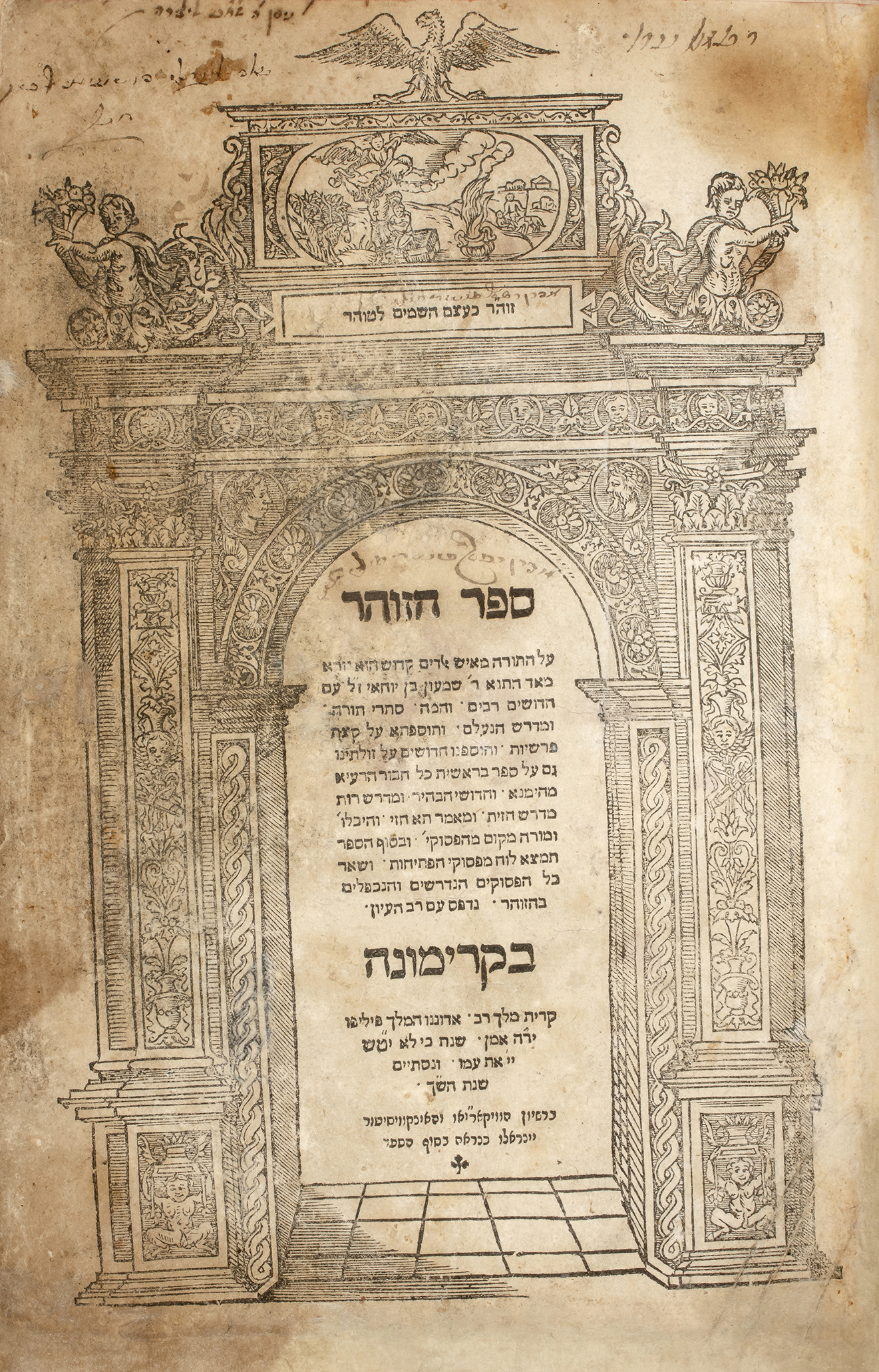
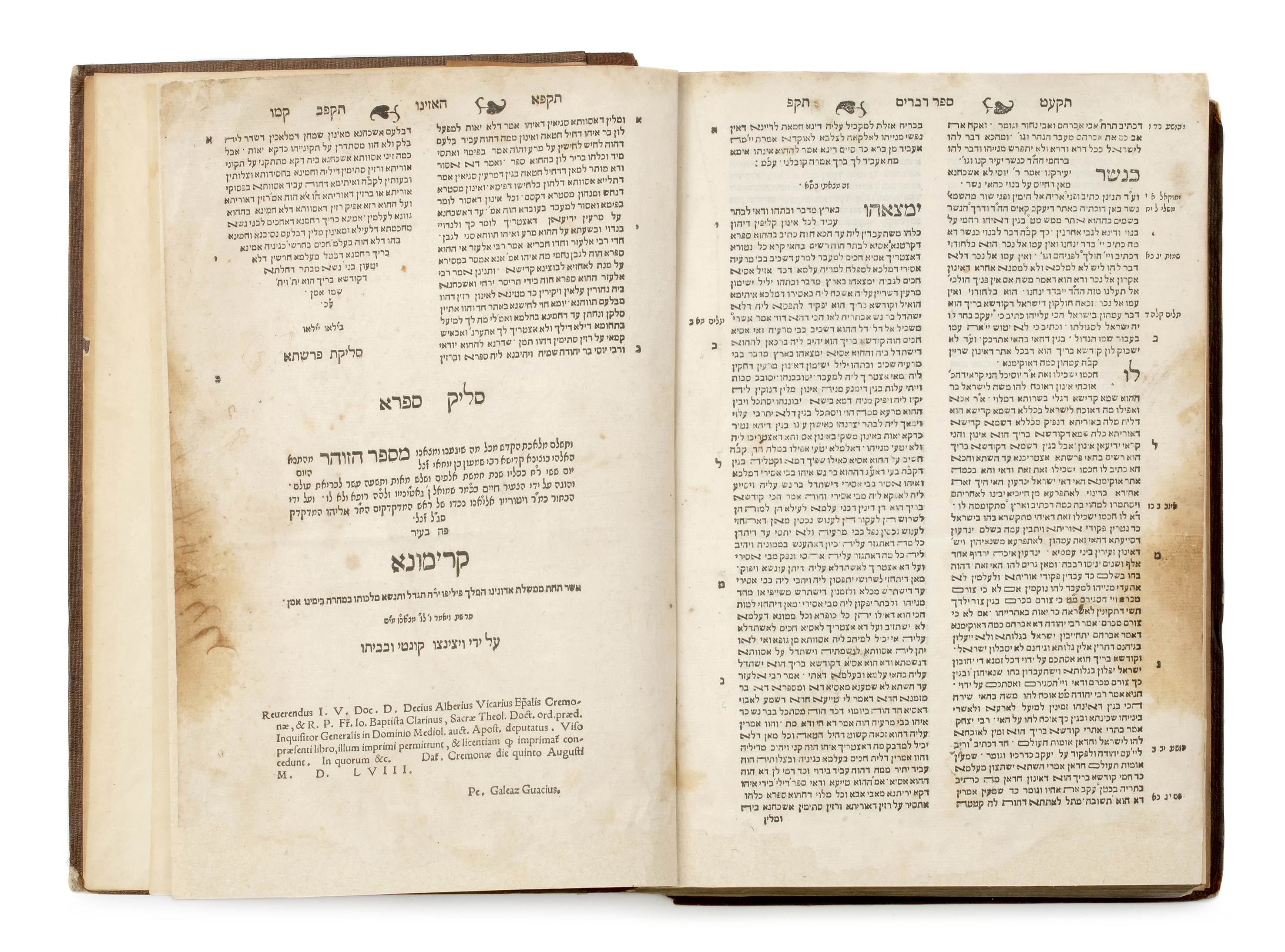
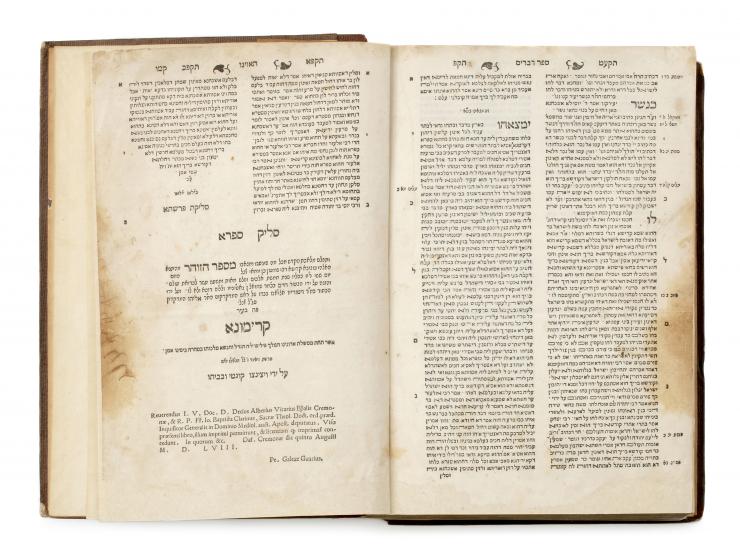
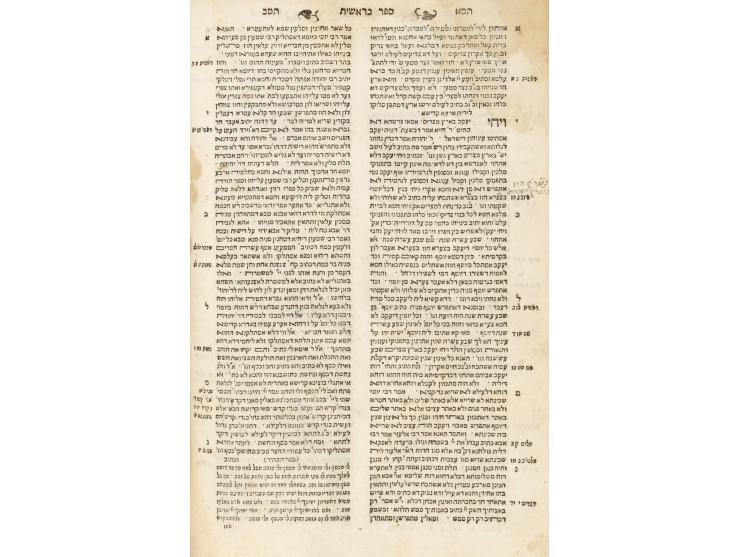
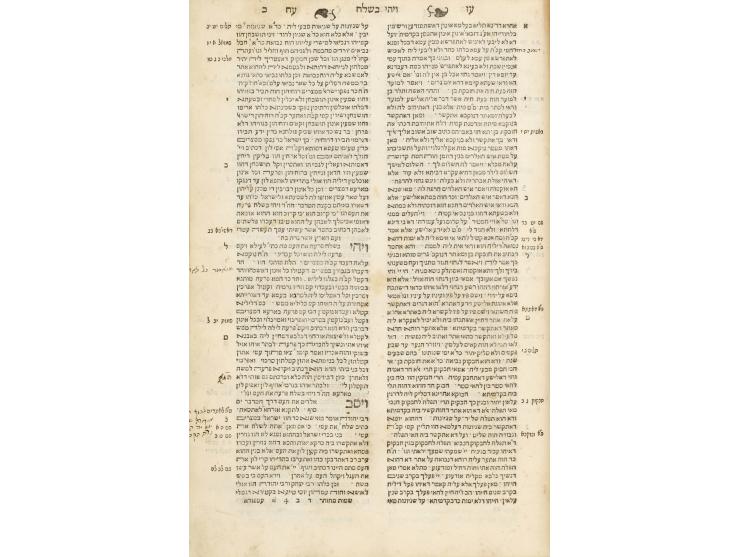
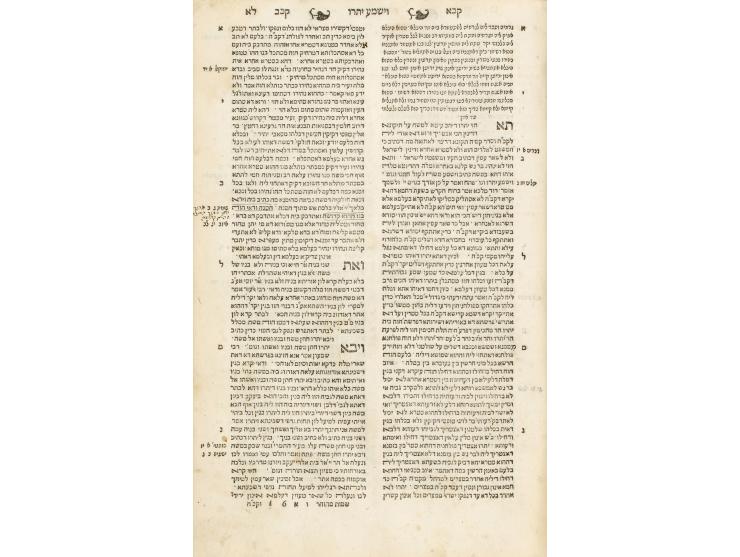
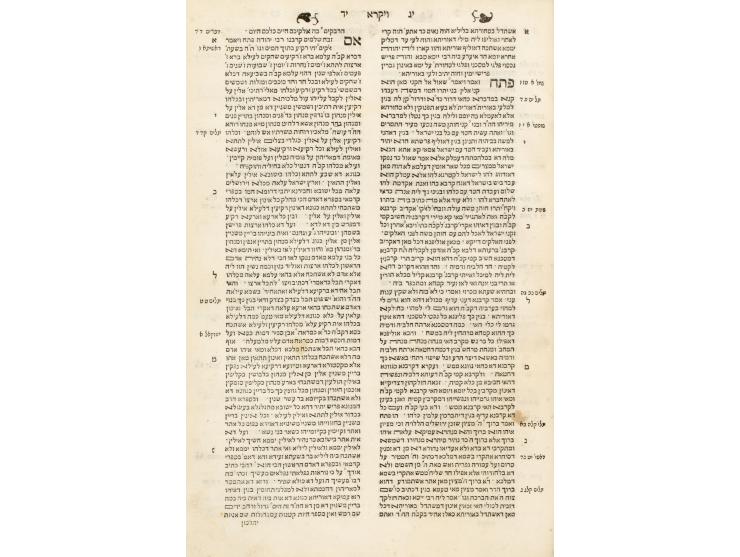
Zohar, attributed to R. Shimon bar Yochai, all three parts, on Bereshit, Shemot and Vayikra-Devarim. Cremona: Vincenzo Conti, 1559-1560. First edition of the Zohar, printed simultaneously with the Mantua edition.
Despite the imprint for 1559-1560 on the title page, the printing of the present edition actually began in 1558, the same year that printing of the Mantua edition of the Zohar commenced (M. Benayahu claims that the present edition even preceded the Mantua printing).
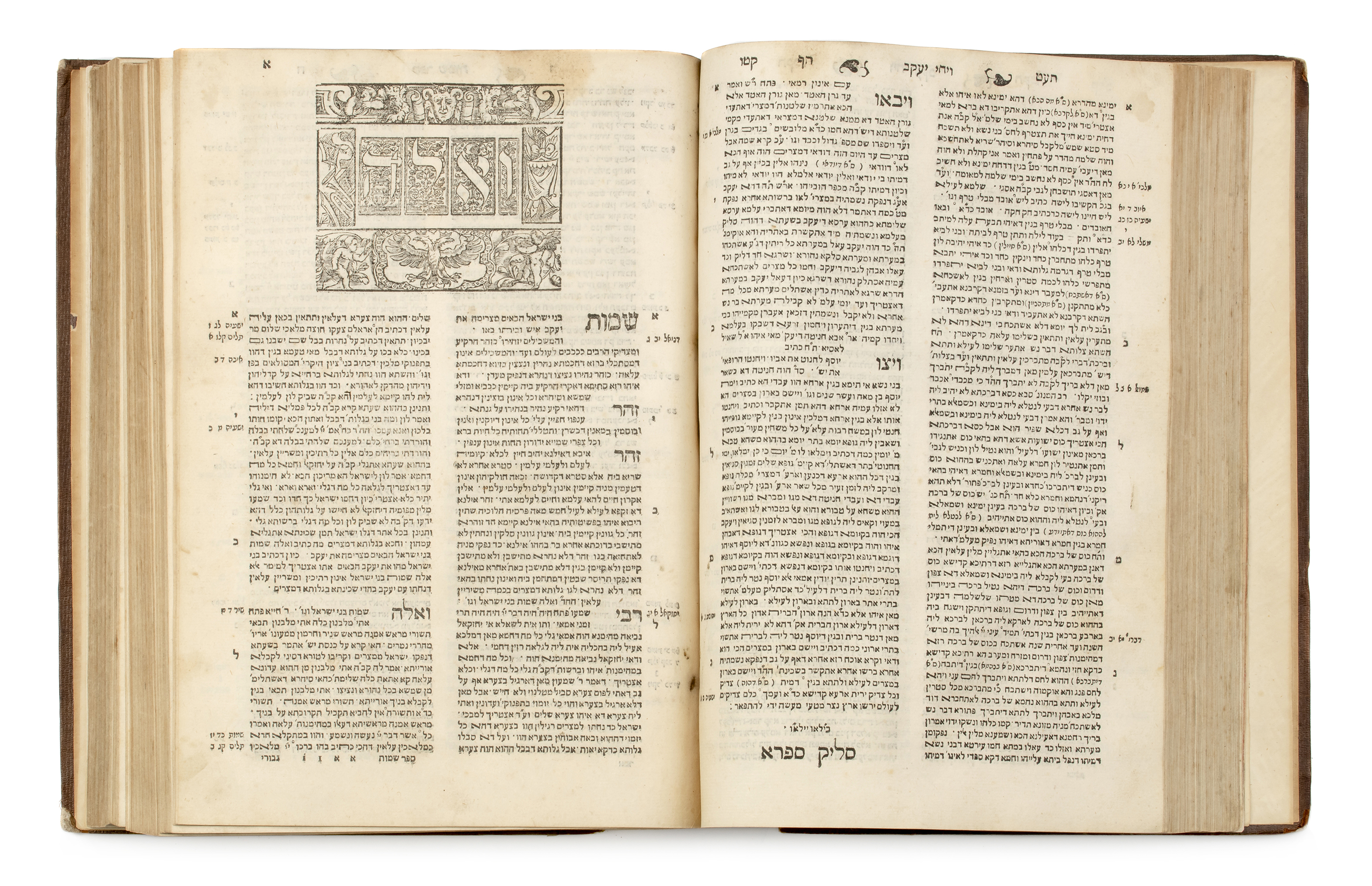
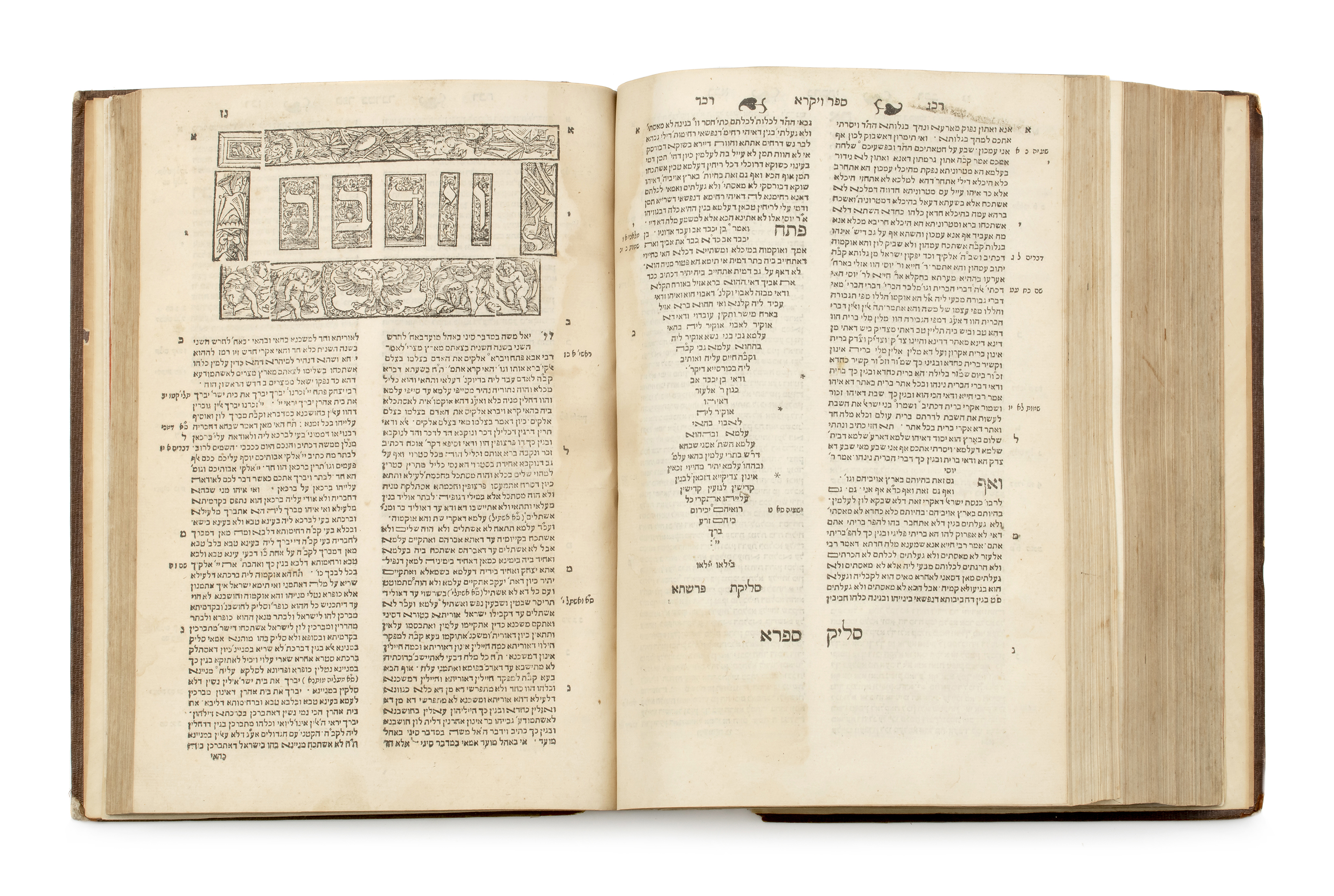
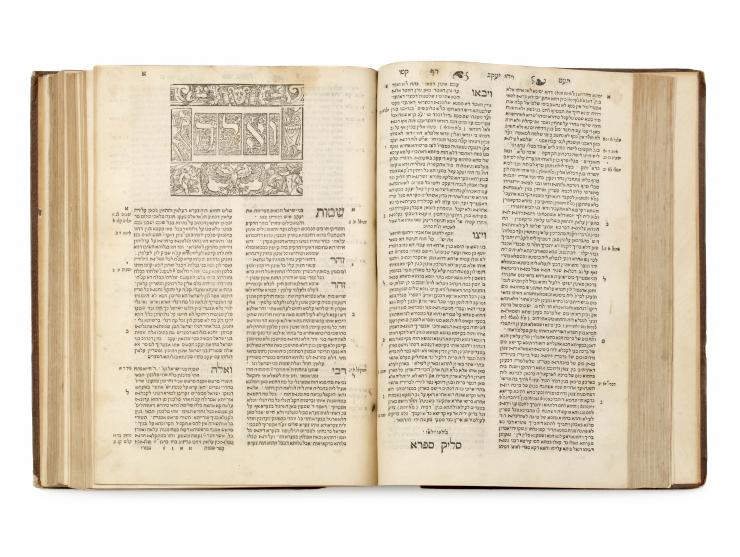
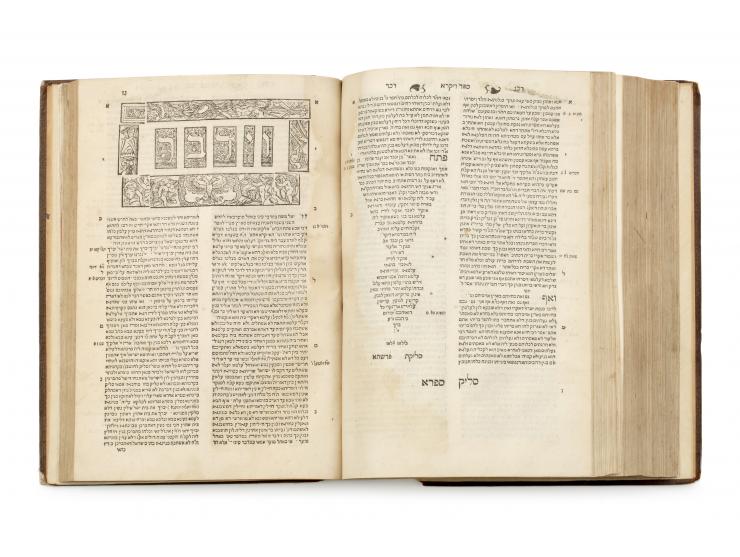
The present edition, with the entire Zohar printed in one volume and in large format (in square type), became known as the "large Zohar", while the small-format Mantua edition printed in three volumes (in Rashi type) was known as the "small Zohar".
Many copies of the present edition reached Ashkenazic lands – Poland and Germany (it may be that the printers had never intended to distribute copies of this edition in Italy). As evidence of this, until the mid-18th century (and later) many authors from Ashkenazic lands cite the text of the Cremona edition (see further Y. Yudlov's article, below). The subsequent Lublin 1622 and Sulzbach 1684 editions follow the format of the Cremona edition.
Over the years, the Cremona edition became especially rare, in contrast to the Mantua edition which was relatively more common. Benayahu writes that many copies of the Zohar were destroyed in the Cremona burning of Hebrew books (HaDefus HaIvri BiCremona, p. 137). This edition was rare even in the very next generation, as R. Moshe Zacuto writes in one of his letters: "Only a small minority possess the large [Cremona] edition…" (Igrot HaRemez, Livorno 1780, 2).
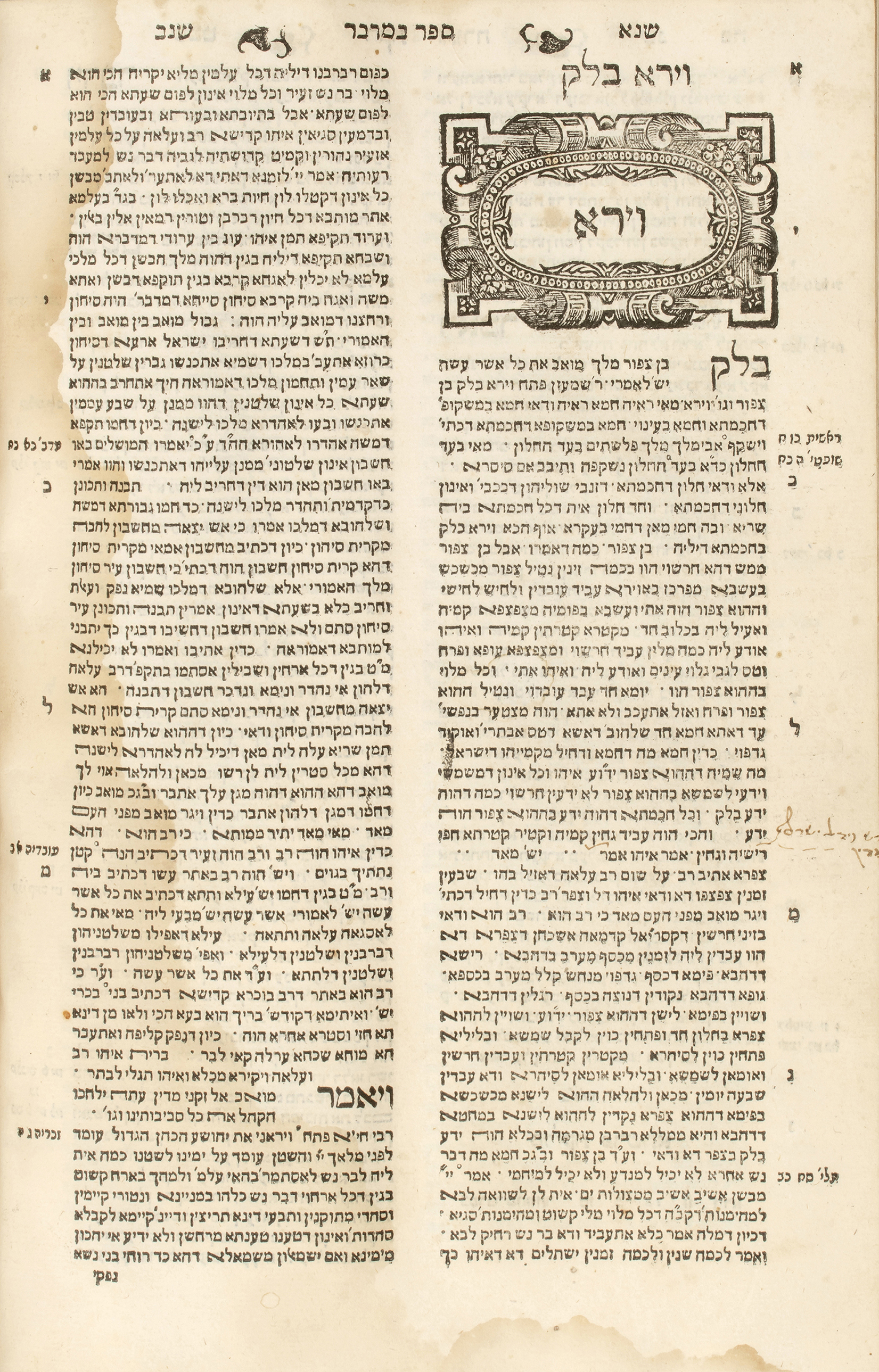
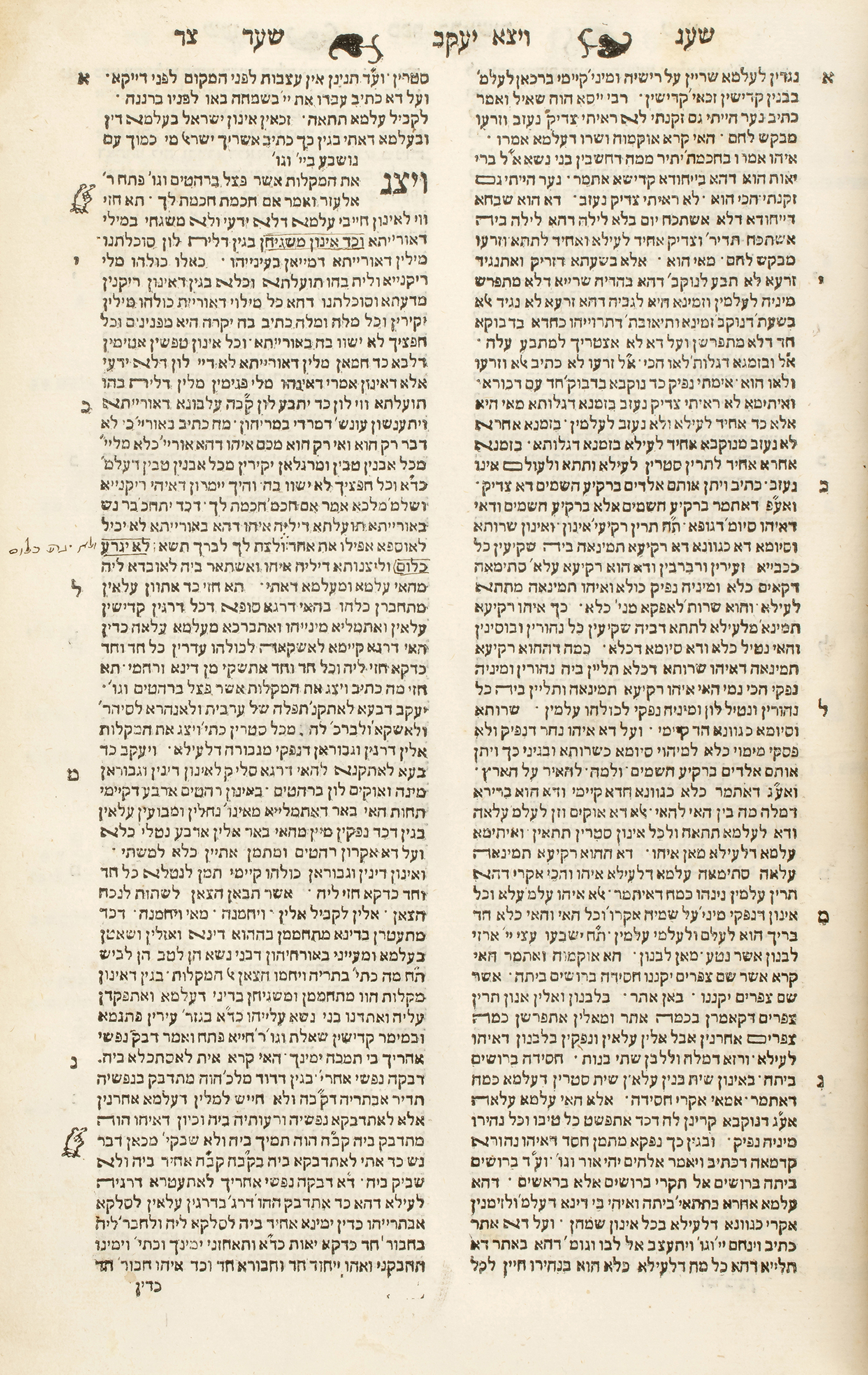
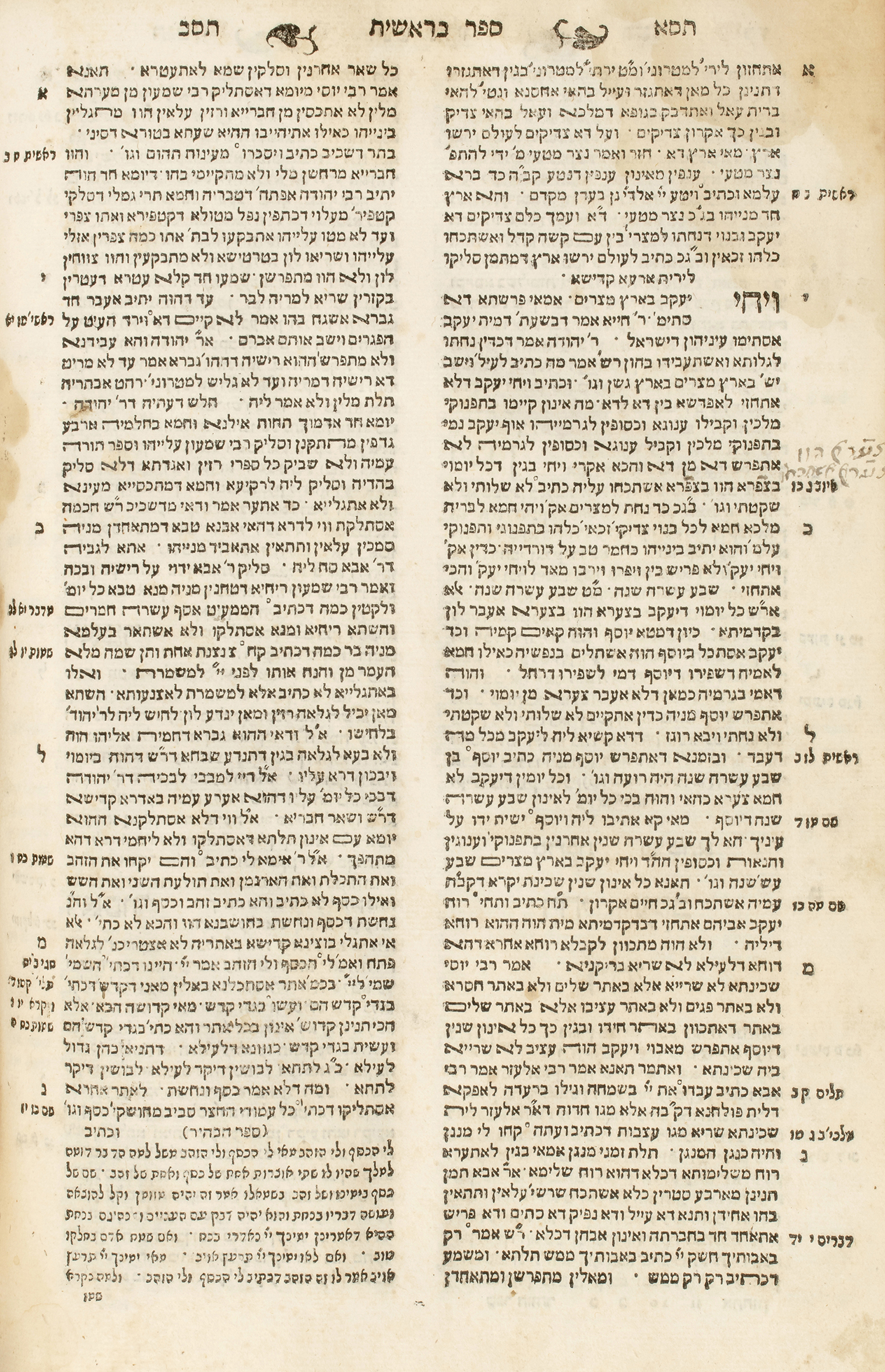
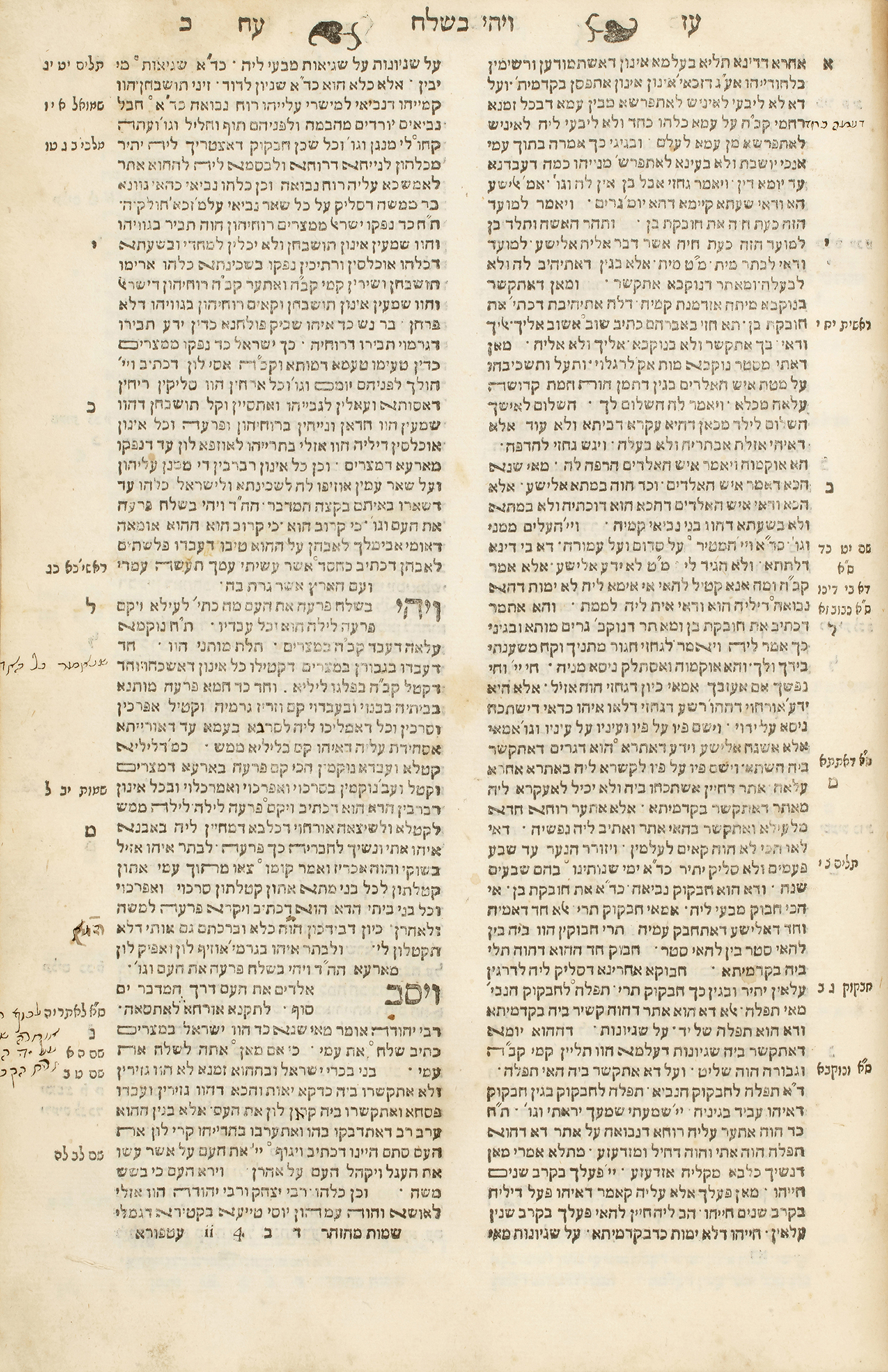
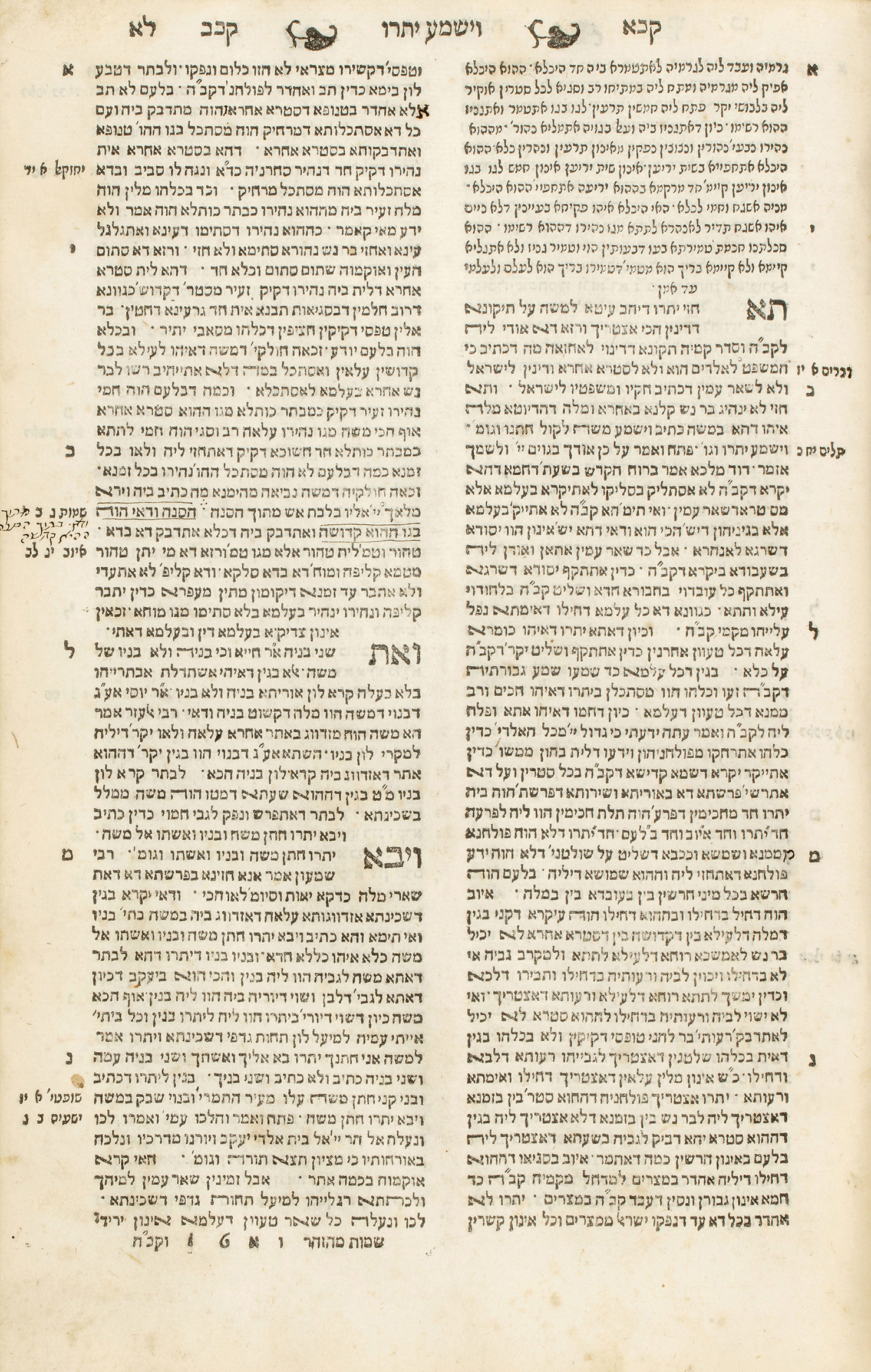
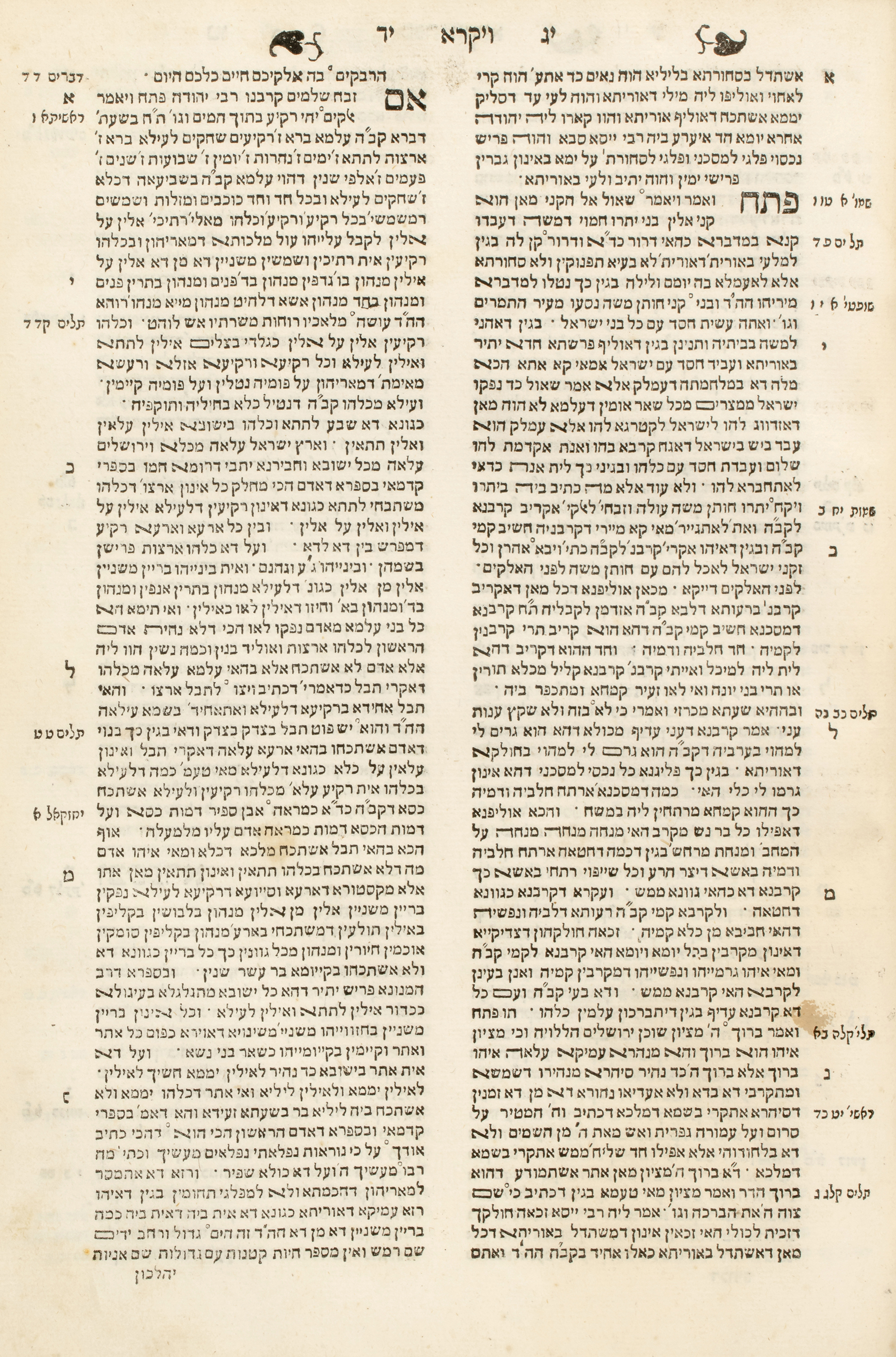
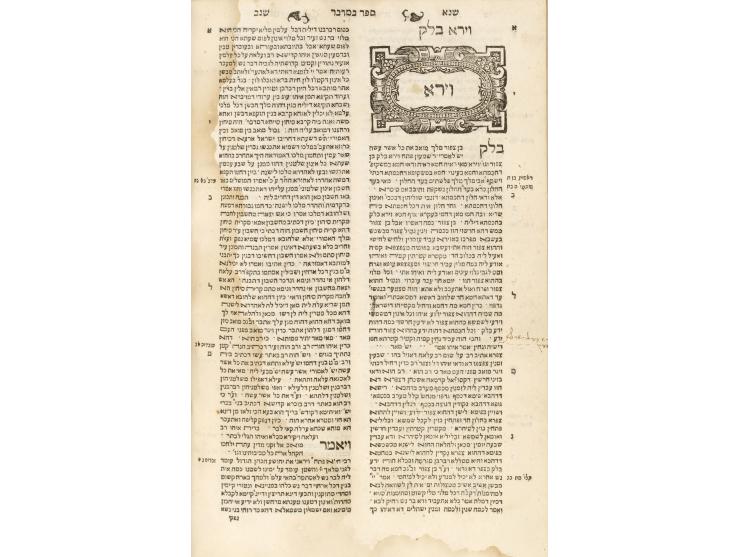
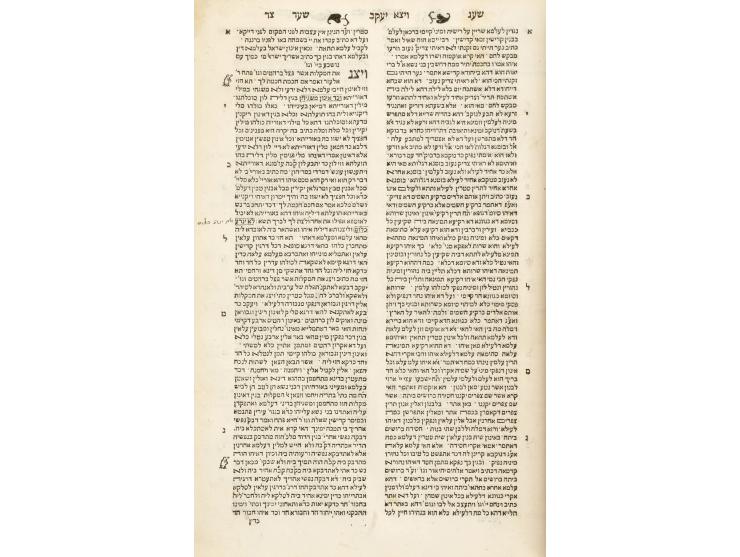
Biblical references are printed in the margins of the leaves (uniquely characteristic of the Cremona edition, unlike the Mantua edition). In addition to the foliation of leaves, the columns and lines are also numbered (every tenth line).
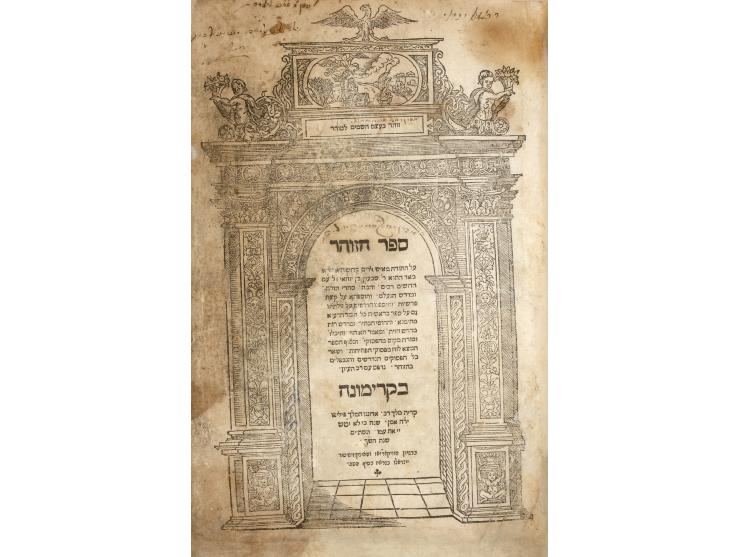
Variations have been identified between copies of the Cremona edition. In most known copies, the title page is dated 1559-1560, as in the present copy. These copies contain eight leaves (leaves 5-6 of Bereshit and leaves 113, 118-122 of Shemot) which according to Benayahu (see below) were printed in Mantua, and are typographically distinct from the other leaves. The Schocken Collection contains a copy with a different title page which does not mention the date of printing, and in which the abovementioned eight leaves were printed in Cremona and resemble the rest of the leaves of the book. The present copy contains the common version of the title page, and those eight leaves are identical to those printed in Mantua, as in the other copies.
Colophon on last leaf: "The holy work was completed… today, Friday… and was proofread by Chaim son of R. Shmuel ibn Gattegno… and R. Vittorio Eliano, grandson of the chief grammarian R. Eliyahu HaMedakdek Segal".
Under the colophon is printed a Latin approval of printing on the authority of the Milan Inquisition, dated August 1558.
Signatures and inscriptions to title page: "Aharon Refael Pontremoli"; "Refael Ami"; "Nisan 1582"; "This came to my portion, Hoshaiah of the family of [Baruch]…".
Inscriptions within text, handwritten corrections and short glosses in several places (by various writers; some glosses trimmed).
All parts in one volume. Bereshit: 132 leaves. Shemot: 122 leaves. Vayikra-Devarim: 146 leaves. 28 cm. Overall fair condition, some leaves in good-fair condition. Stains, including large dark dampstains (especially to first leaves, as well as in other places). Traces of former dampness with mold stains to first leaves. Tears, including marginal open tears to title page, first and last leaves, slightly affecting text, repaired with paper filling. Worming, partially repaired with paper filling. Old binding, with wear and defects (tears to spine and sides).
For a general description of the book and its printing, on the relation between the Cremona and Mantua editions, and different copies of the Cremona edition, see: Meir Benayahu, HaDefus HaIvri BiCremona, Jerusalem, 1971, pp. 121-137; Y. Yudlov, "On Books, Printers and Publishers", HaSefer – 70-year jubilee volume for Mosad Harav Kook, Jerusalem, 2008, pp. 556-559 (Hebrew).