
Auction 106 Incunabula and First Editions | Illuminated Manuscripts | Jewish Ceremonial Art
Decorated Parchment Manuscript – Ashkenazic-Rite Siddur – With Passover Haggadah, Tractate Avot and Other Selections – Rare Piyyutim – Ashkenazic Lands, 14th Century
Opening: $150,000
Sold for: $475,000
Including buyer's premium
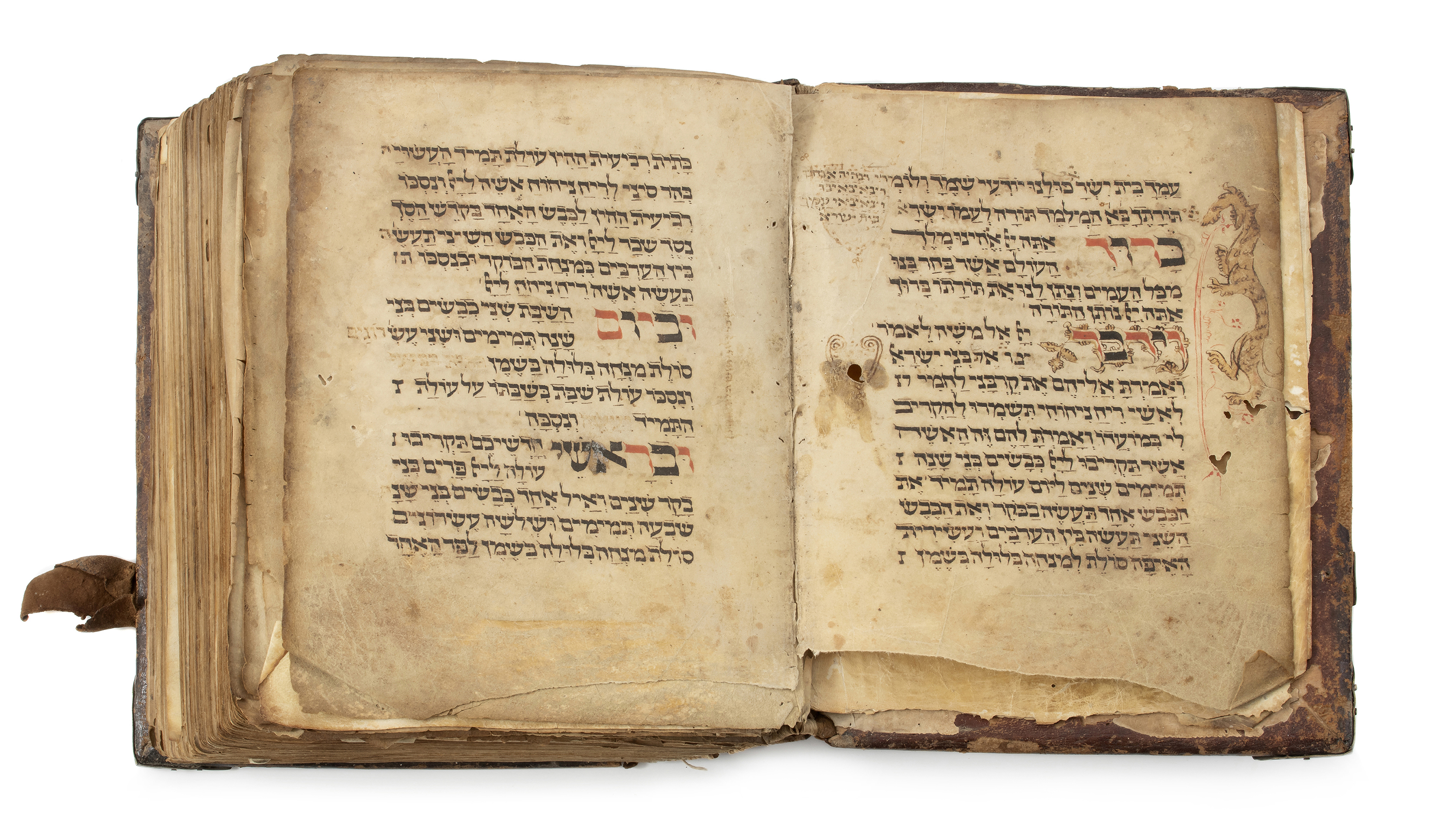
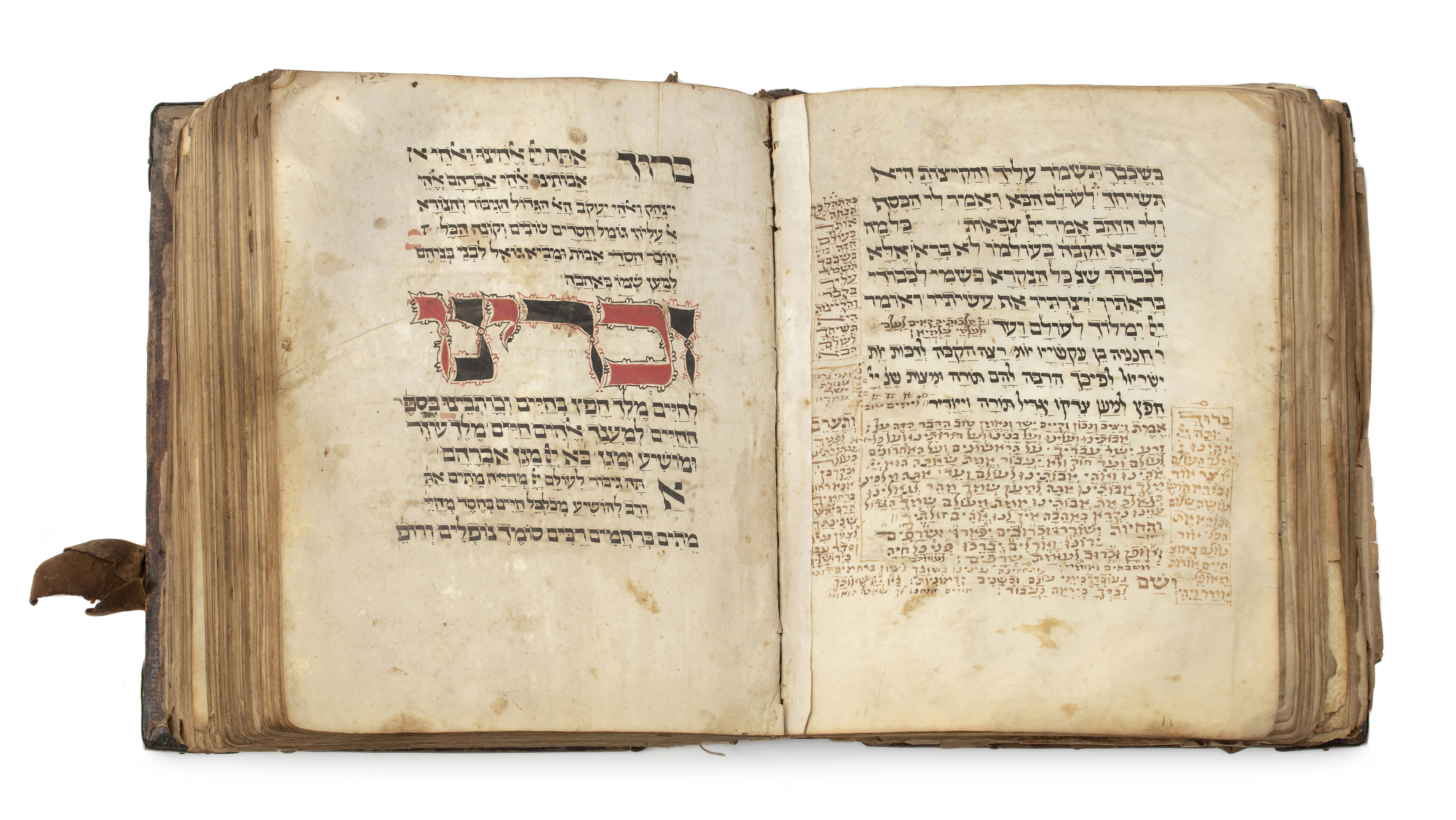
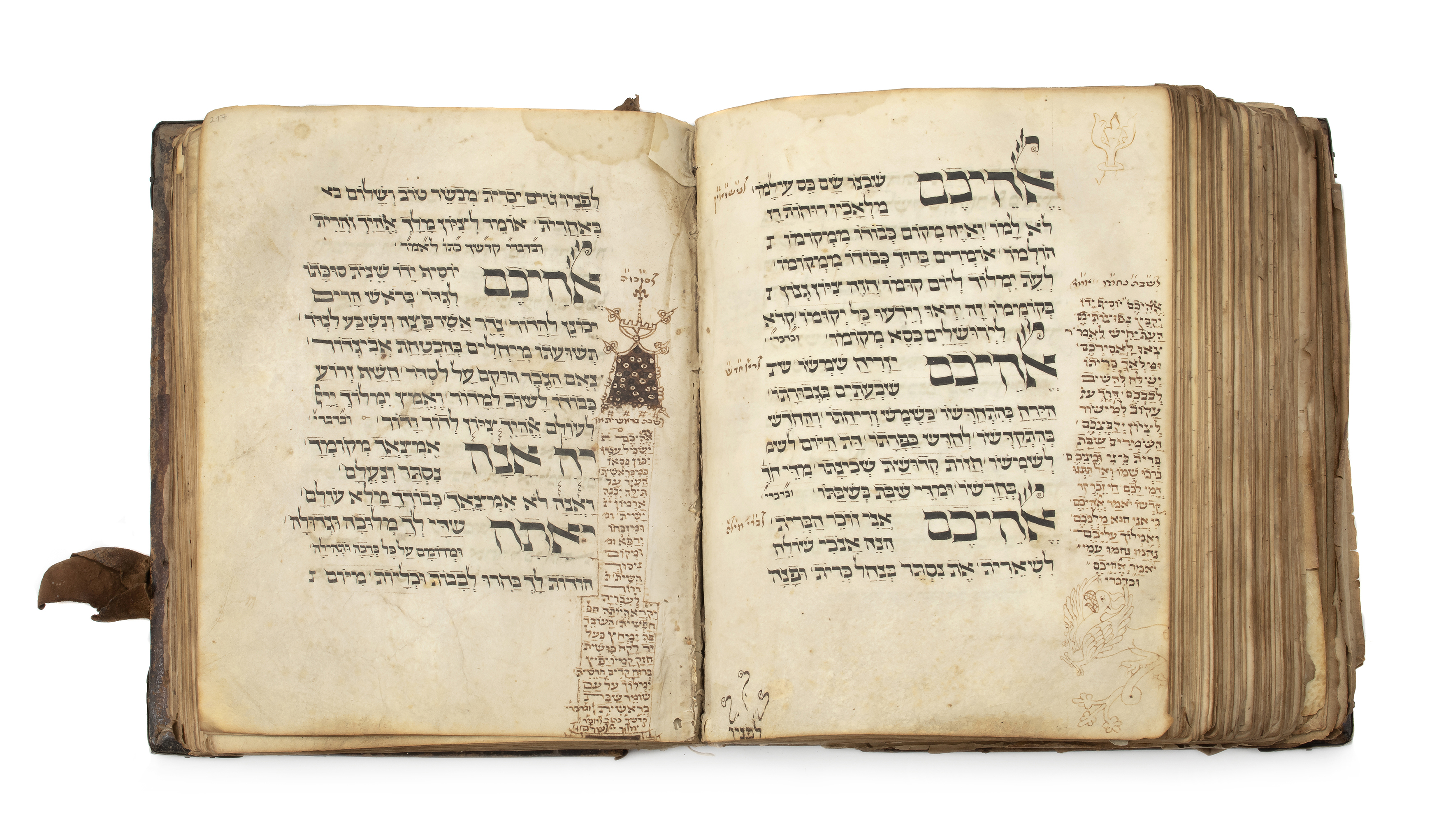
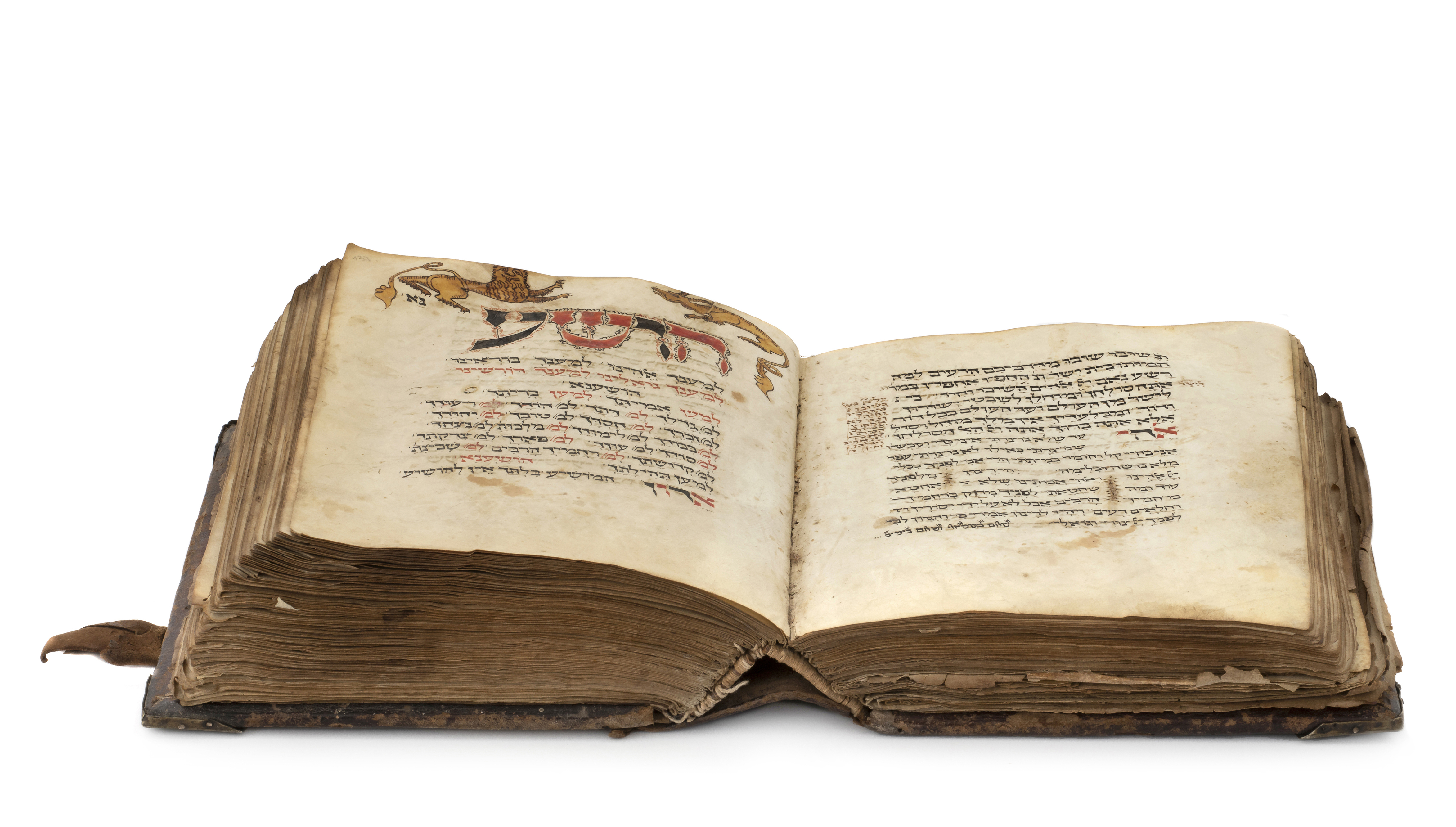
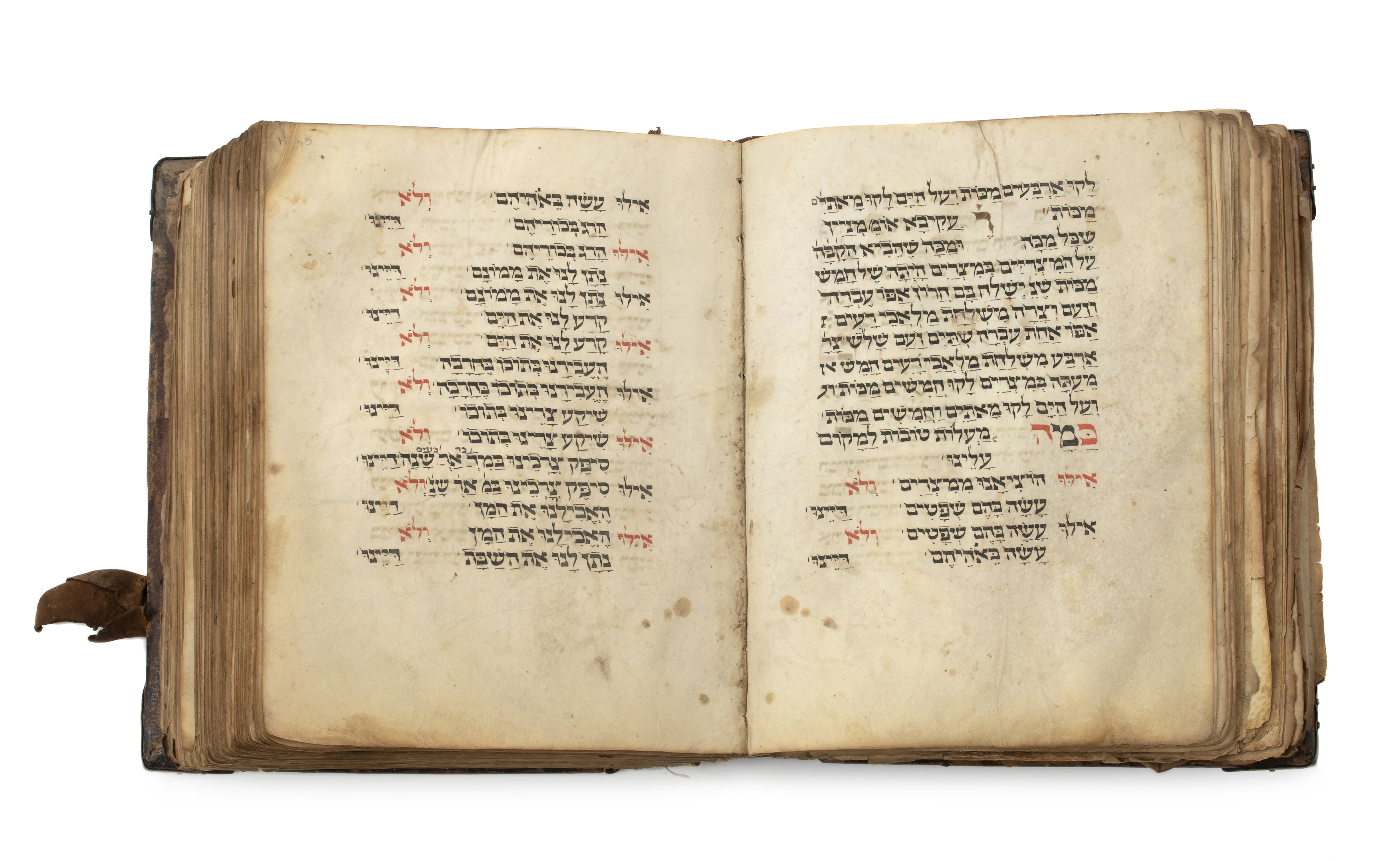
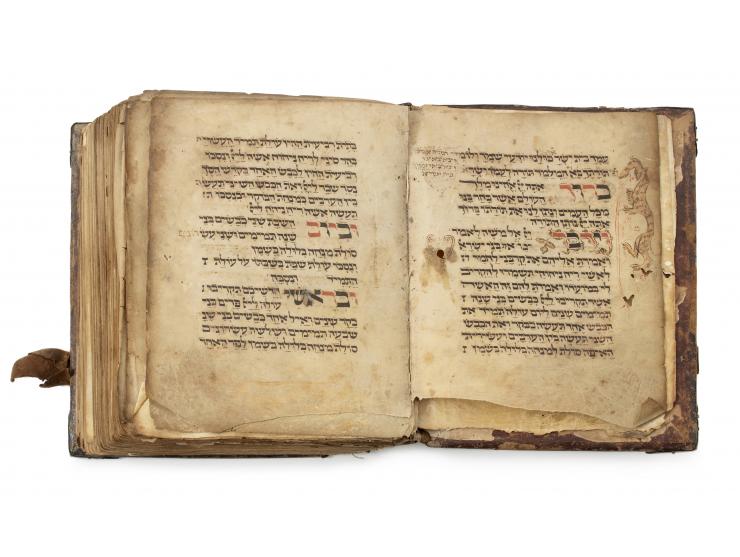
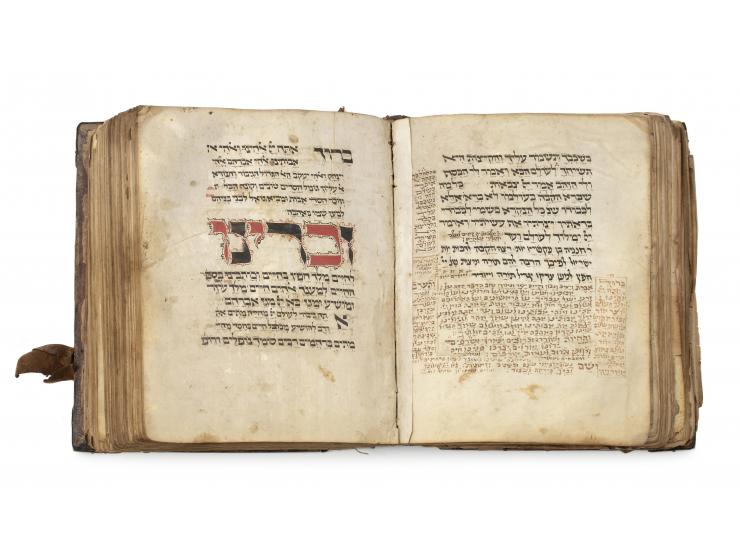
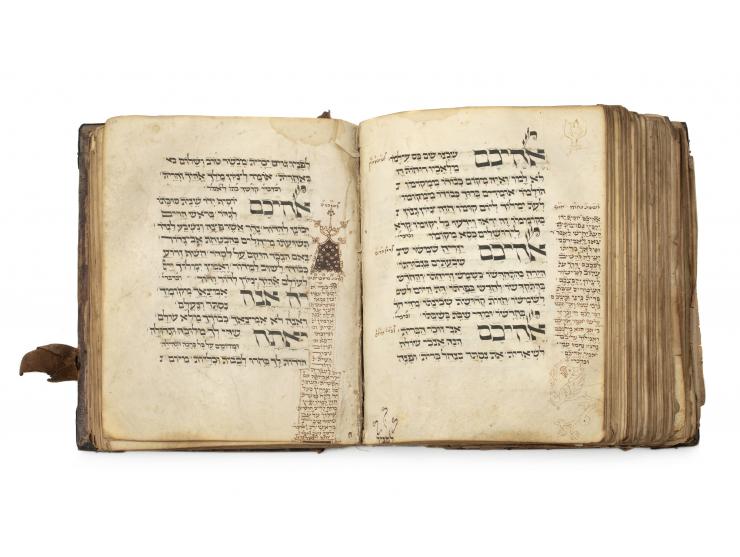
Parchment manuscript, Ashkenazic-rite siddur, for weekdays, Shabbat and festivals – prayers and piyyutim, with Passover Haggadah, Tractate Avot, selected laws and more. [Ashkenazic lands, ca. 14th century].
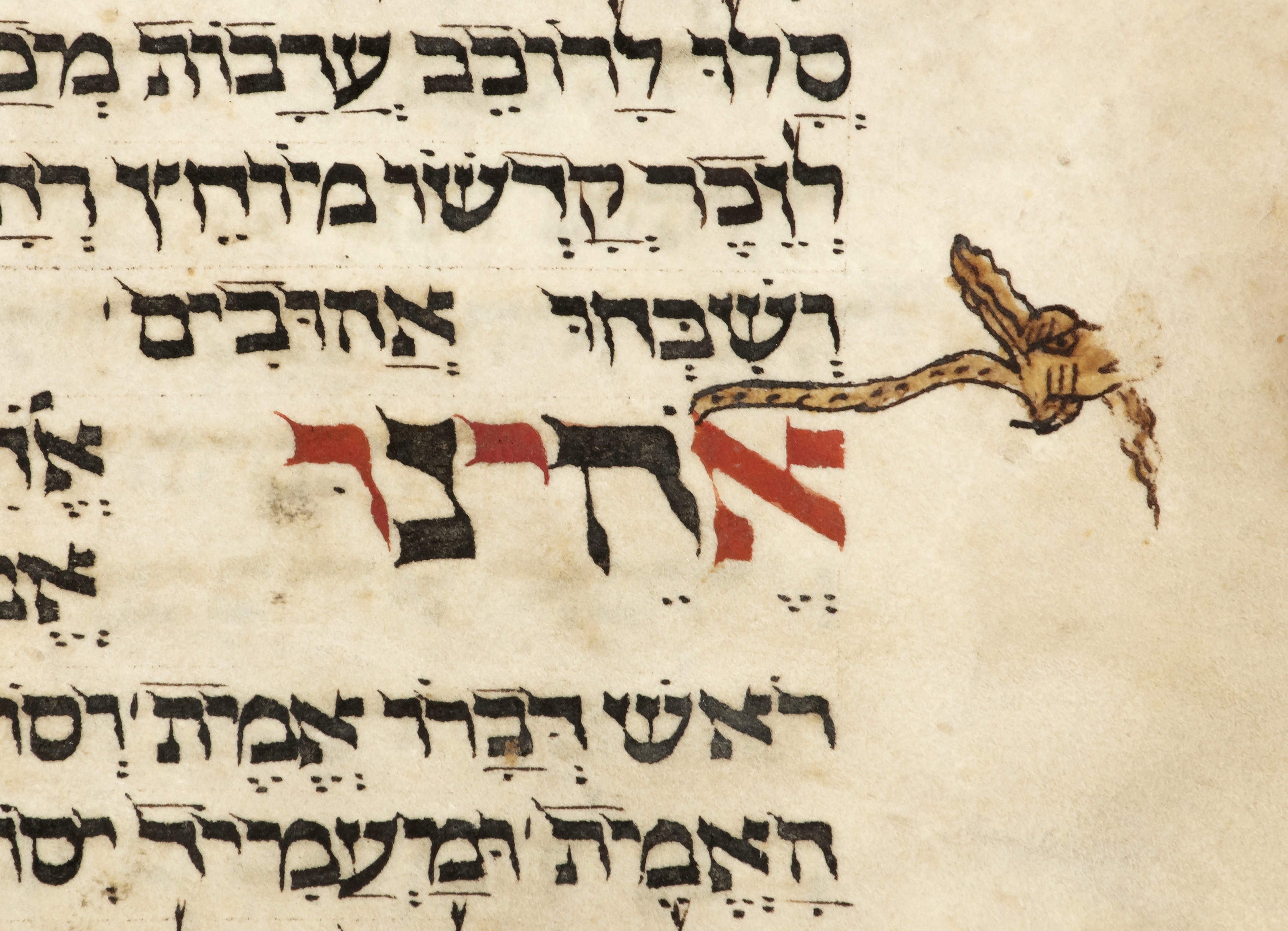
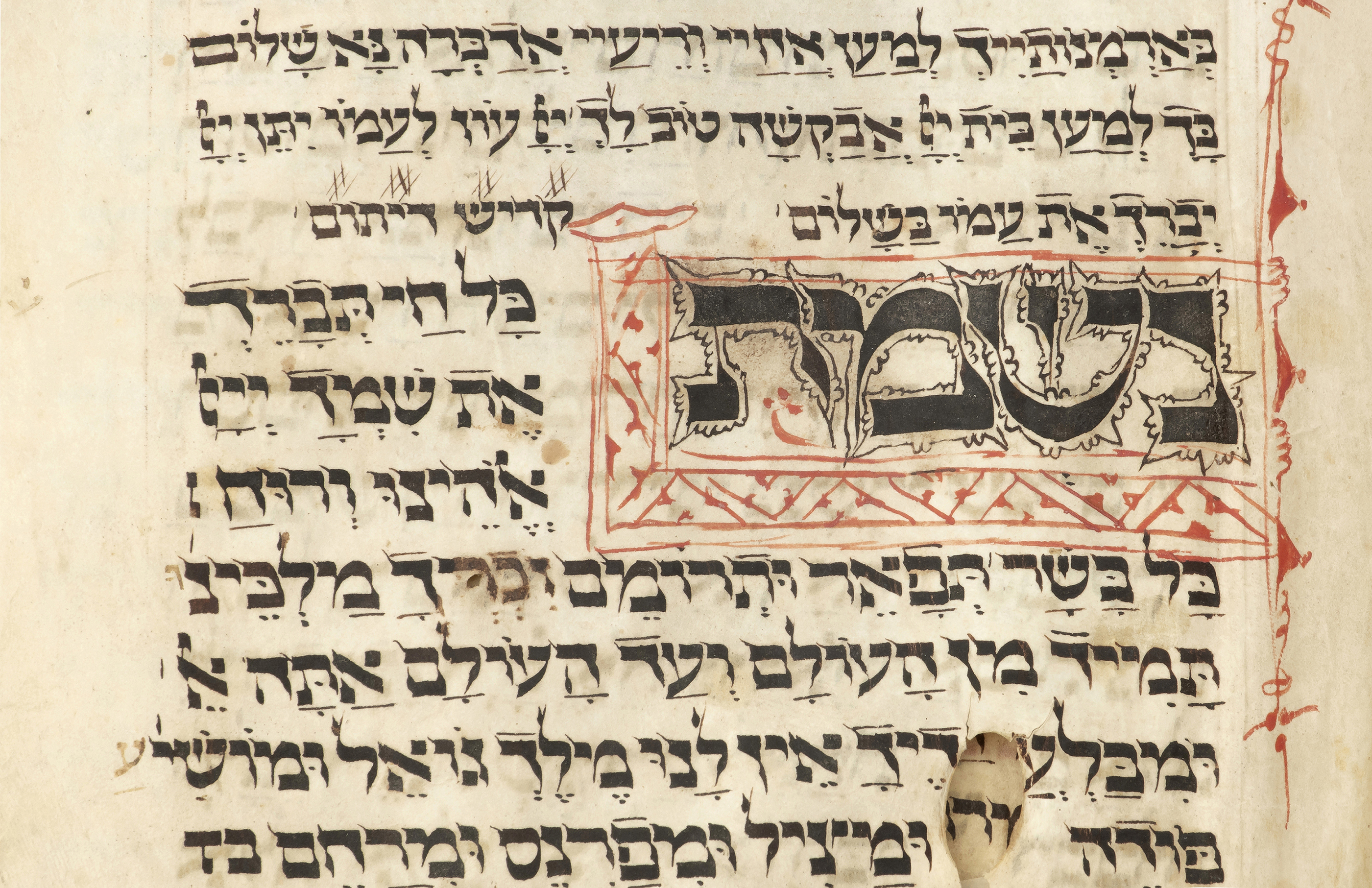
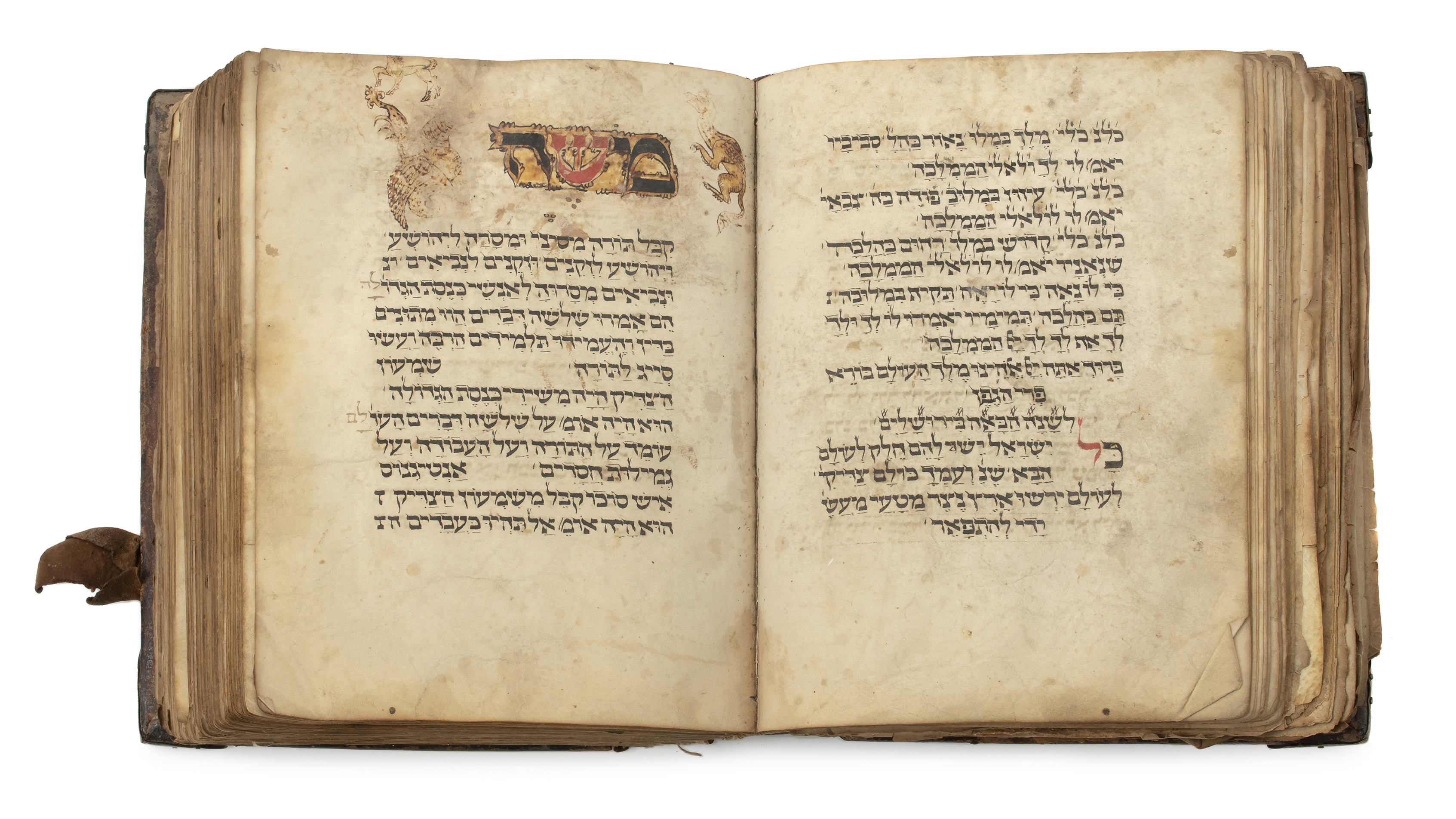
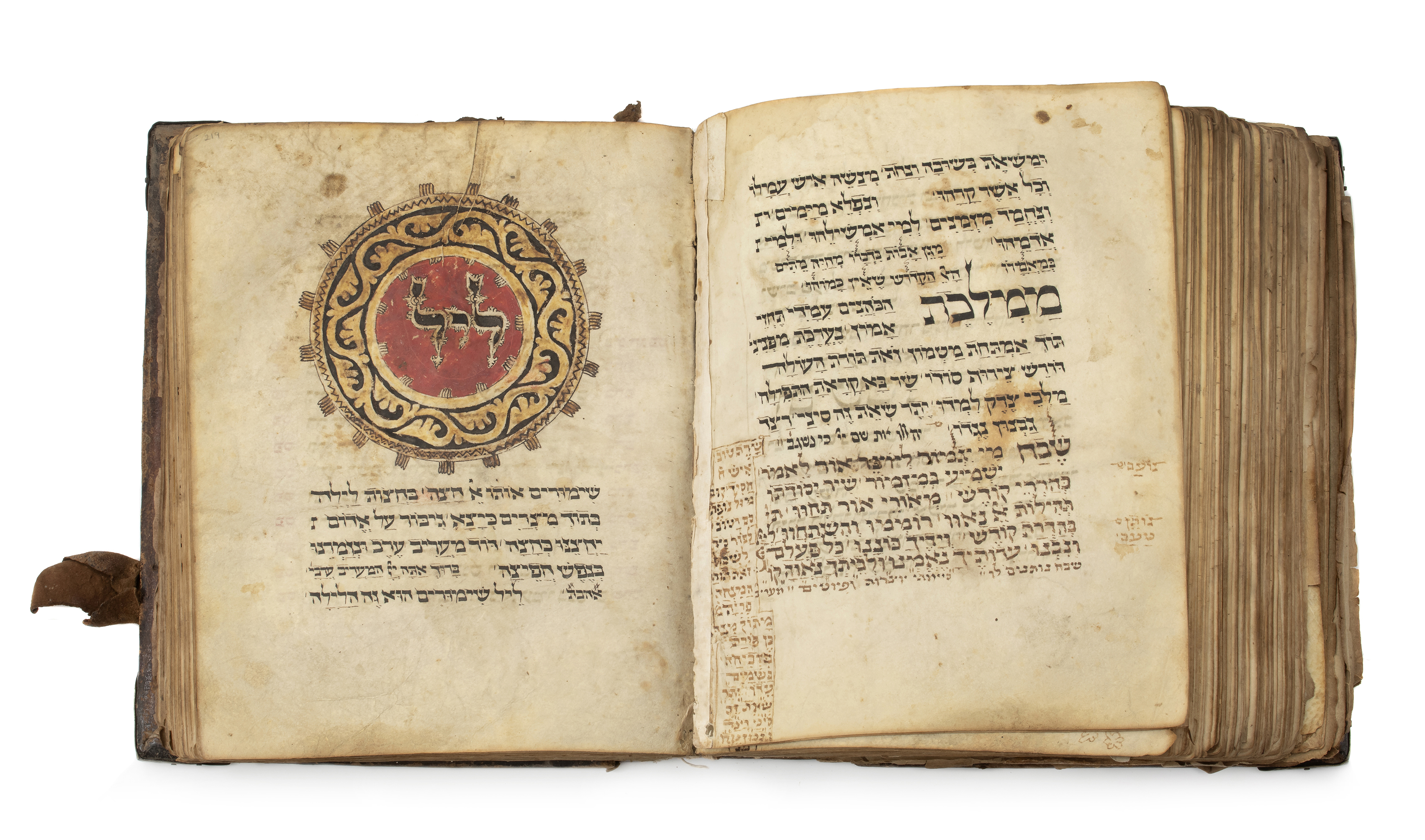
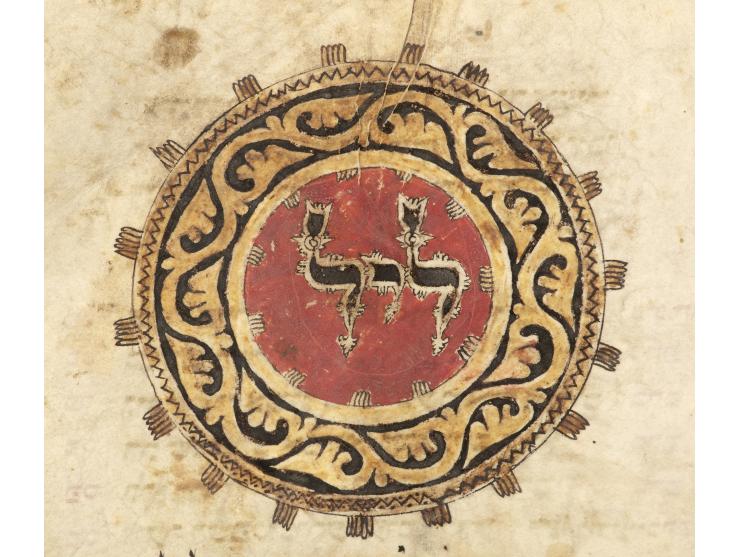
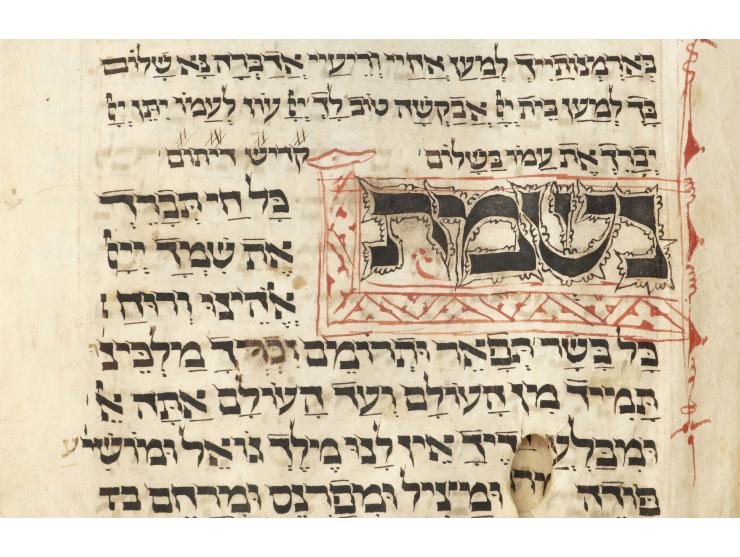
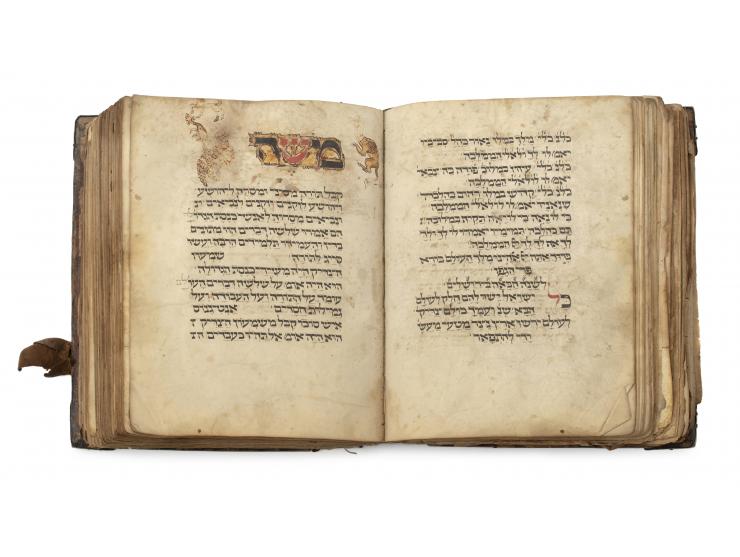
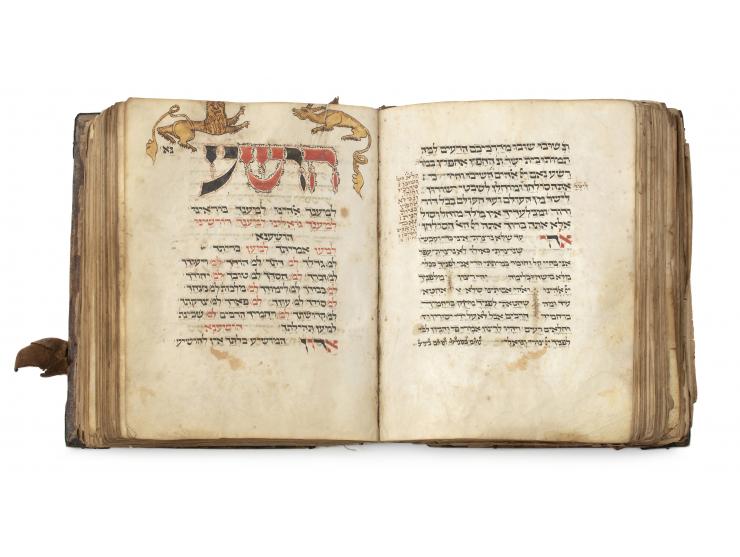
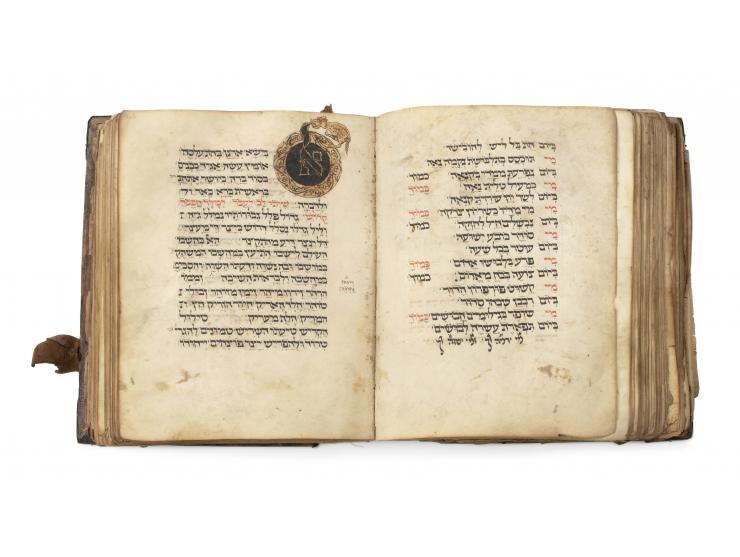
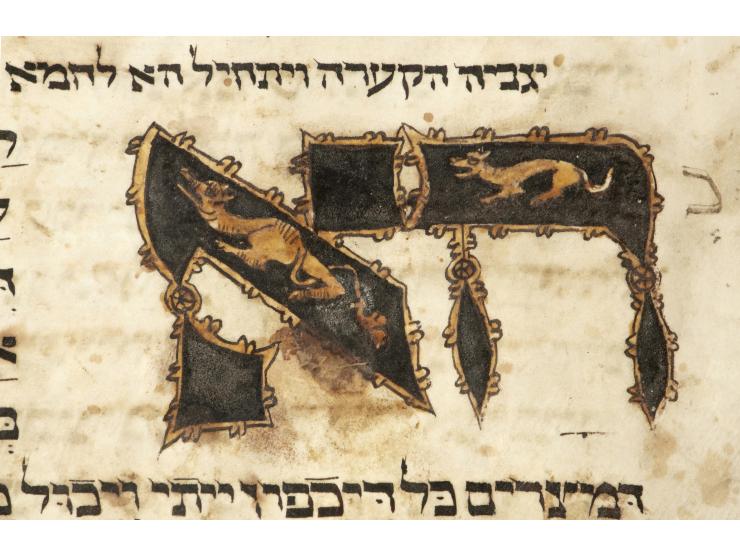
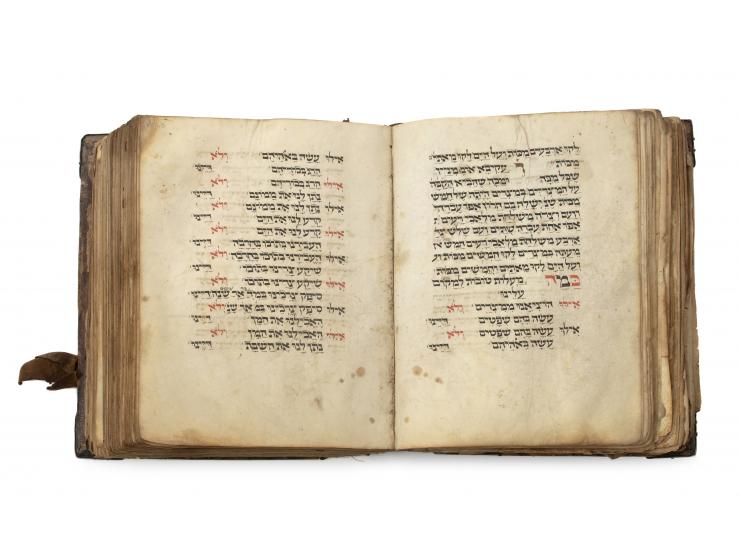
Thick volume. Ink on thin parchment leaves. Neat Ashkenazic script (square and semi-cursive, partially vocalized), in several hands. Several initial words enlarged and specially decorated. Some initial words decorated with frames, with some extending to the margins in geometrical and floral decorations, occasionally including illustrations of mythological beasts. Other initial words and lines of text in some places decorated with paint (alternating in black and red ink).
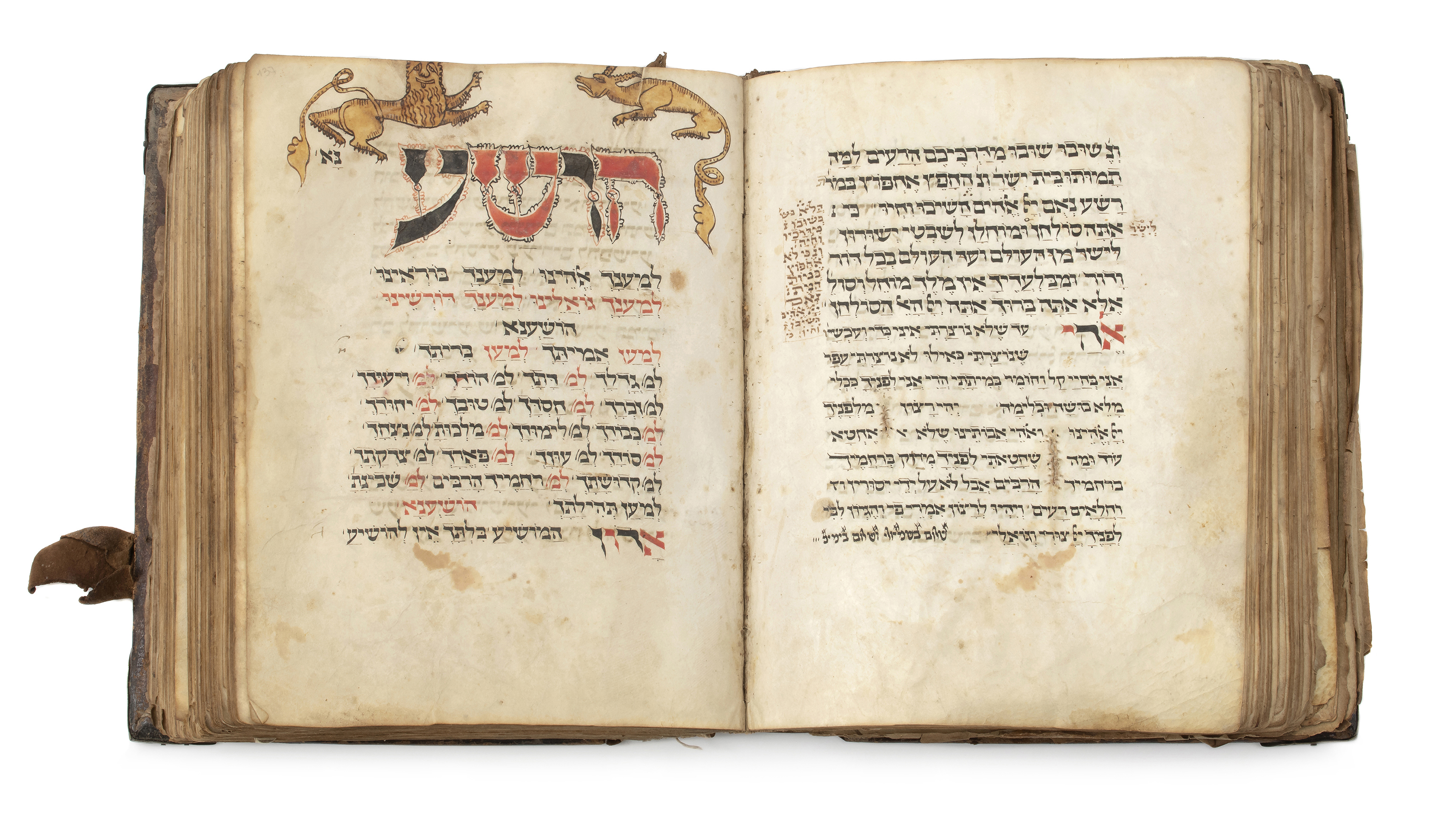
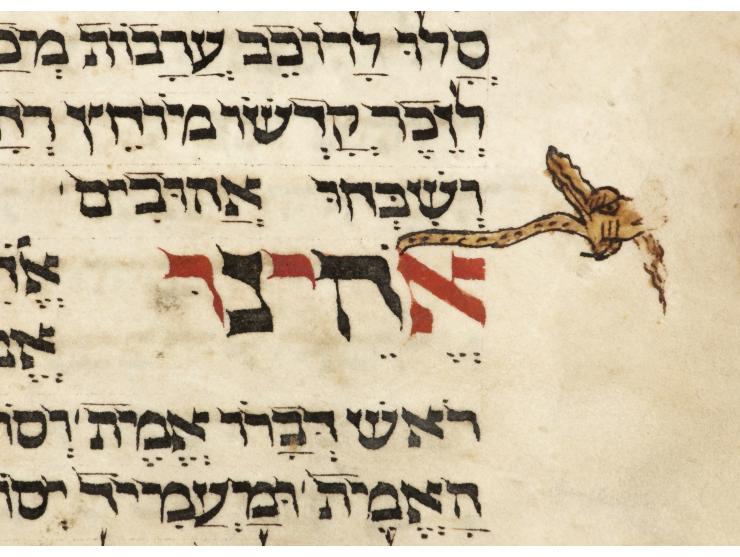
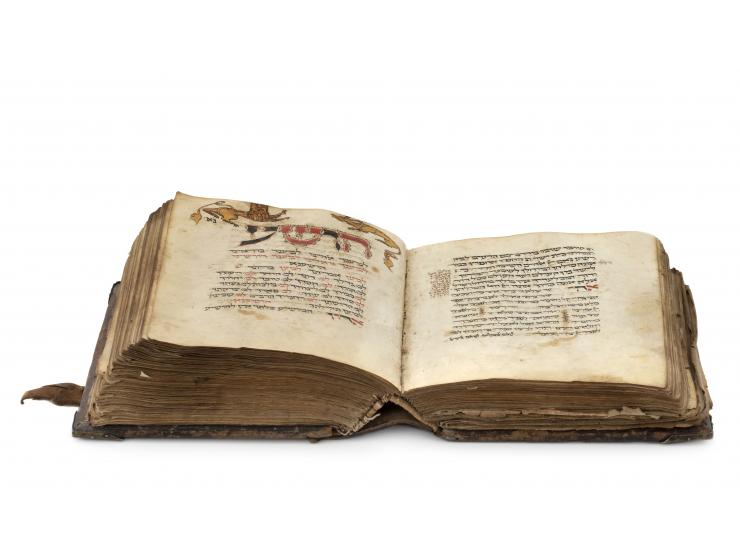
Illustrations of dragons, mythological beasts and hybrid creatures – characteristic of medieval manuscripts – appear next to some initial words. Dragons are featured on pp. 4b, 8a, 25a, etc.; hybrid creatures are featured on pp. 13a, 17b, 21b, 39b, etc. Large illustrations of a colorful dragon (partially colored in yellow), a hybrid creature and a unicorn (top trimmed) are featured around the initial word of Pirkei Avot (p. 85a). Illustrations of a crouching dragon and a lion (colored yellow) are featured around the initial word of Hoshanot (p. 138a).
Other large and significant decorations include:
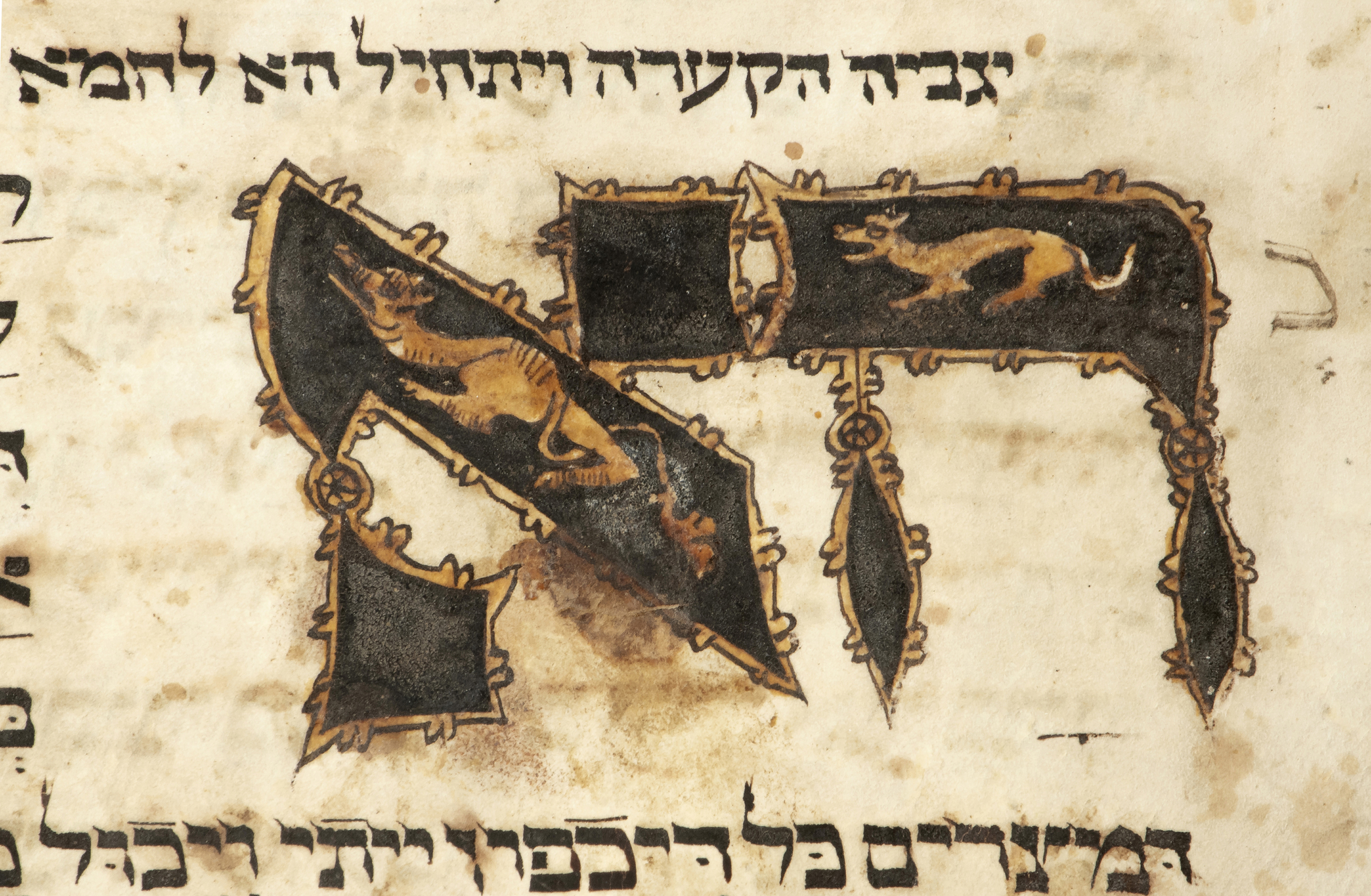
P. 69a – Two dragons interlocked in the letters of the initial word, colored yellow against a black background.
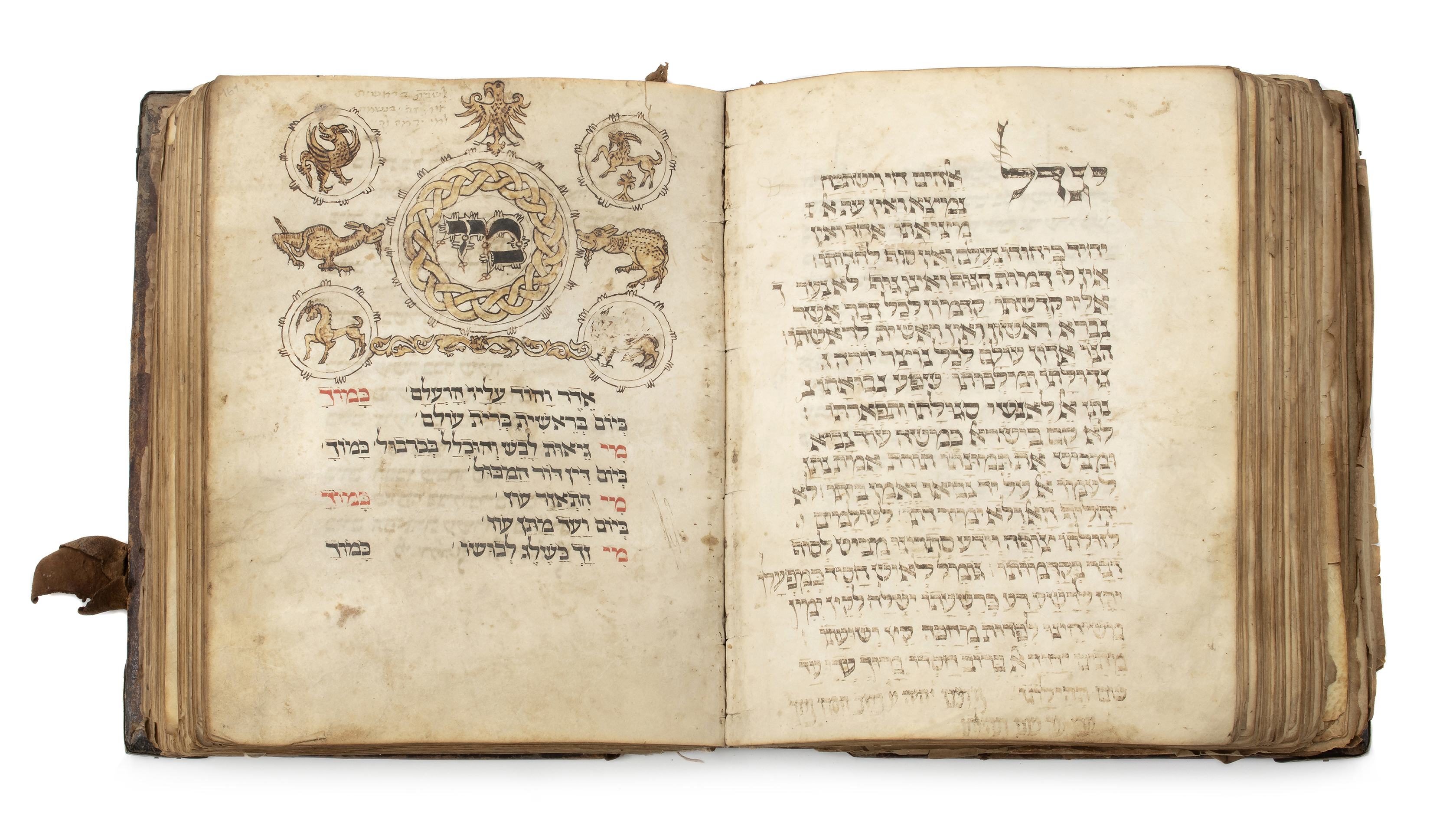
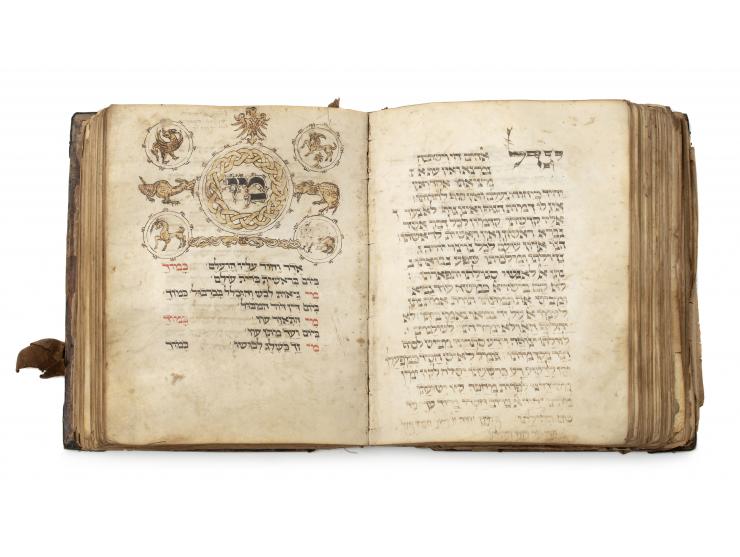
P. 162a – Initial word of piyyut surrounded by round frames and a circular interlace; above it an eagle decoration and beneath two mythological creatures whose tails are designed in a vegetal pattern, with six animals on the sides: a goat, dragon (?), unicorn and a winged hybrid creature – surrounded by round frames – and an unframed pair of dragons (all creatures and interlace colored yellow).
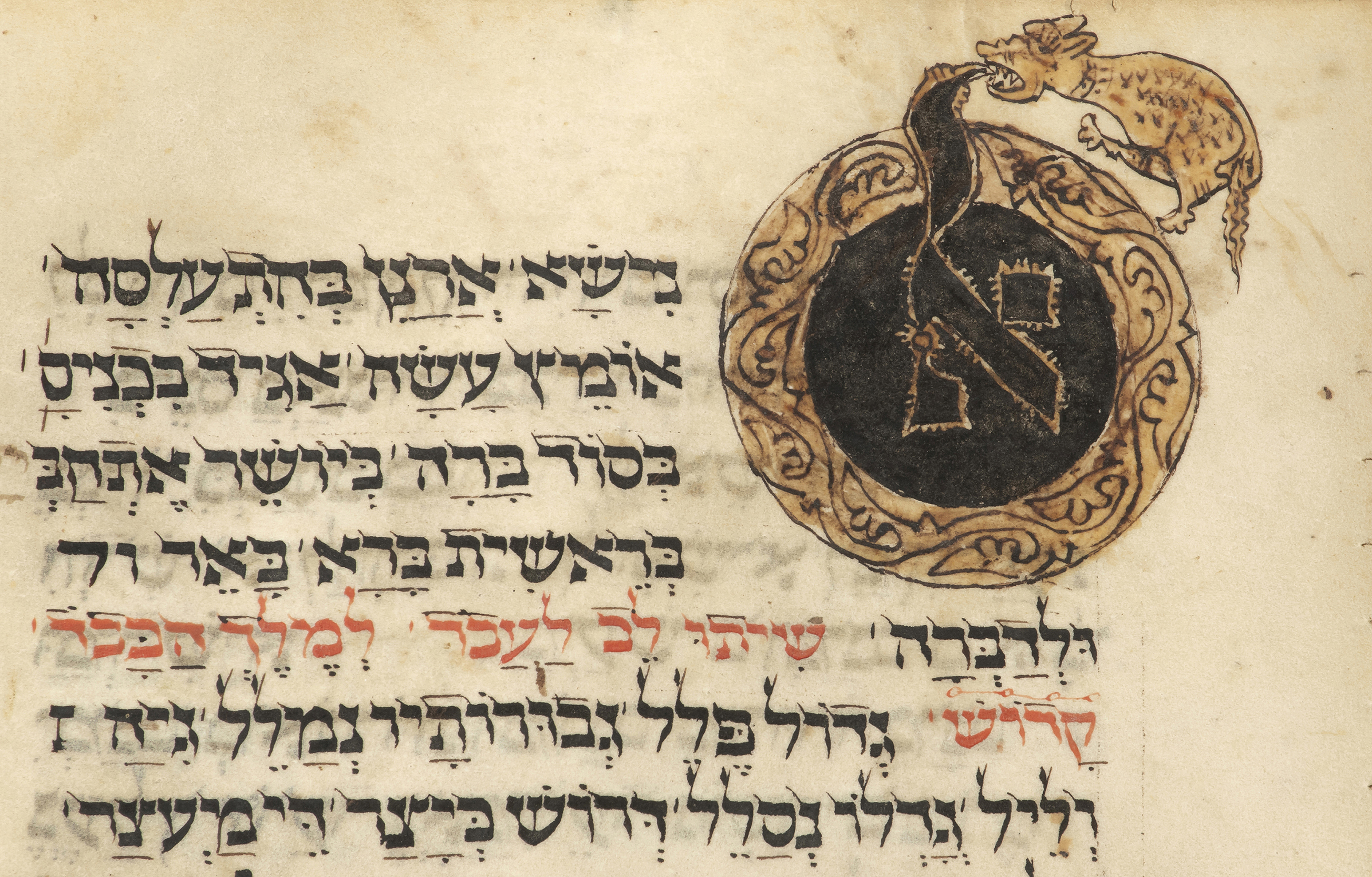
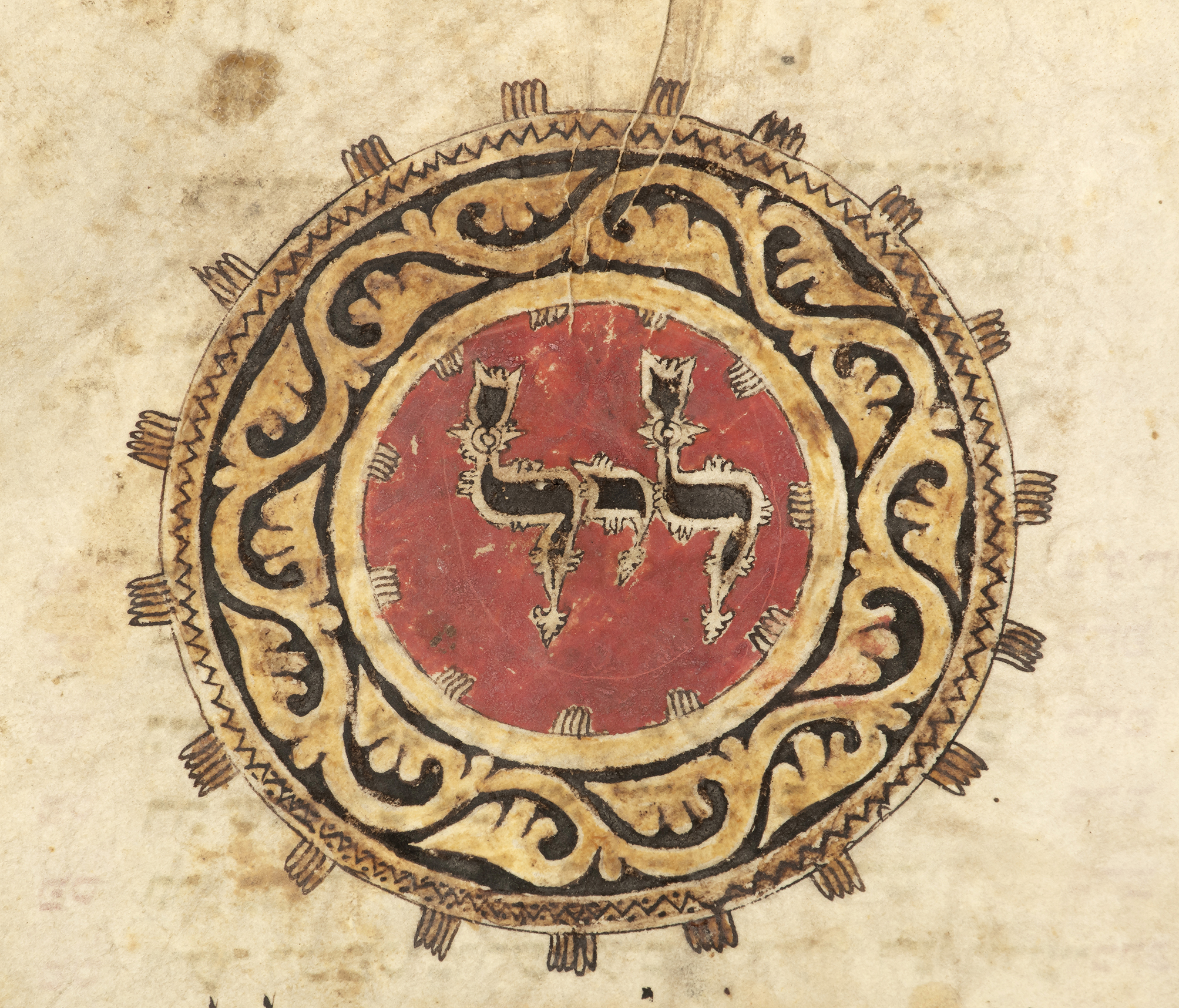
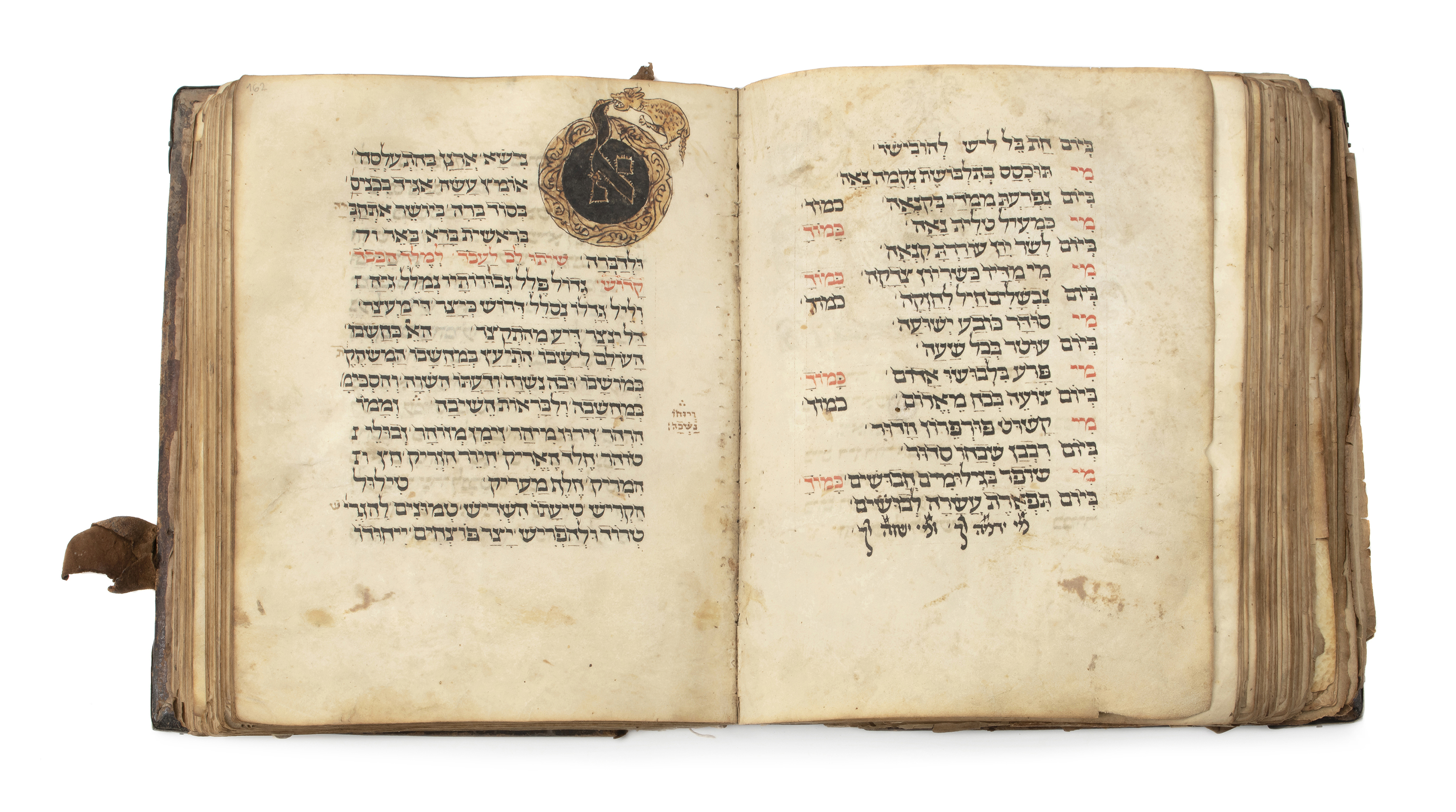
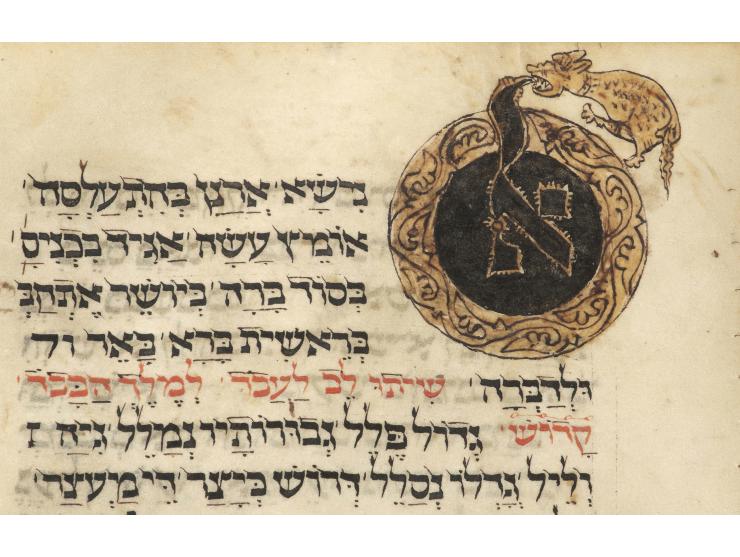
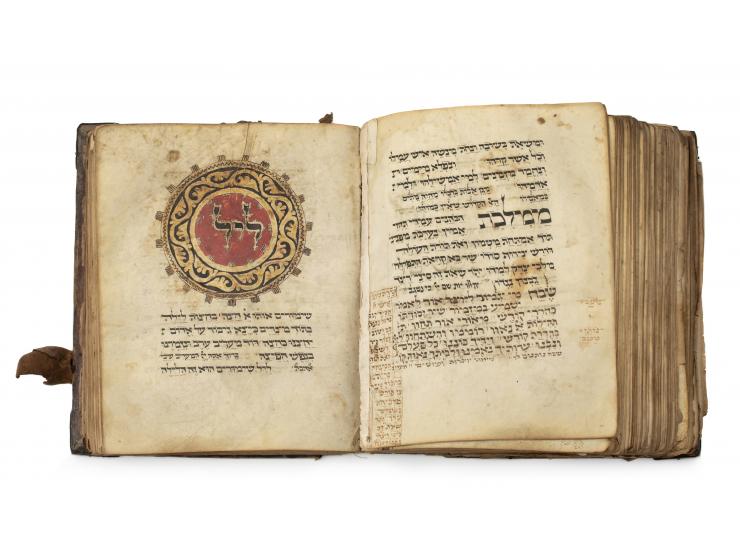
P. 163a – Contours of initial word of piyyut colored yellow, against a black background, in a round frame surrounded by a decorative vegetal pattern, also colored yellow. A dragon atop the frame is biting the top of the Alef-Lamed ligature.
P. 220a – Initial word of piyyut against a dark red background, surrounded by several round frames decorated in vegetal and geometric patterns.
The handwriting and illustrations are characteristic of Ashkenazic manuscripts of the 13th-14th centuries (see, for instance, Bodleian Library Ms. Michael 627, and the Luzzatto Machzor – Sotheby's, October 2021).
Most of the volume was written by the same scribe. Various additions were added to the volume later, written by other scribes, and in a more amateurish hand (possibly from a slightly later period; such as Evronot, Tashbetz, Kinot for Tishah B'Av and more; see below). On pp. 99b, 101b, the name "Moshe" is indicated by a decoration next to the word, apparently as an allusion to the scribe's name.
The text of the siddur belongs to the western branch of the Ashkenazic rite (on this rite, see: D. Goldschmidt, Machzor LeYamim Noraim, I – Rosh Hashanah, Jerusalem 1970, preface). In this branch, the piyyutim (such as Maarivim and Yotzrot) were freely selected by the communities; the present siddur also reflects a unique local selection of piyyutim, including several rare piyyutim (noted below).
The manuscript comprises:
Year-round prayers (weekdays and Shabbat), Passover Haggadah, Pirkei Avot, High Holidays prayers, Hoshanot, Megillah blessings for Purim and "Asher Heni", Tziduk HaDin, and piyyut series for special Torah readings and special days (Reshut, Yotzer, Ofan, Zulat and Maariv).
Parts written by hands other than the main scribe: positive interpretation of a dream, Yotzer and Zulat for Chanukah, "Yigdal", Kinot for Tishah B'Av, Evronot, Tashbetz and more. Marginal glosses and additions in later hands appear in many places. In some places, the additions are written within decorated frames, adding tower-like illustrations in Gothic style (pp. 23b, 98b, etc.).
Ownership inscriptions: "I, Shmuel son of Gershon son of [?]" (p. 265b), "Shmuel son of Gershom" (p. 356b).
Censorship expurgations in a few places. Some places have the deleted text rewritten over the deletion.
Further information on the content of the siddur and its special piyyutim:
In the text of Al Chet for Yom Kippur (appearing twice, on pp. 124b-126a and pp. 129b-131a), the confession for "Pelilut" (judgment) is replaced by "Pitzat Peh" (opening of the mouth), and in the first text, the confession for "Kashyut Oref" (stiffness of the neck) is replaced by "Kefitzat Yad" (clenching of the hand).
On p. 149b, the order of Hoshanot for Sukkot and Hoshana Rabba is written in another hand. This order of Hoshana Rabba is not known from any other source. On the same page is a rare Elokeichem piyyut for Simchat Torah, also unknown from any other source, by R. Shlomo son of R. Yitzchak, beginning "Elokeichem Shochen Shechakim".
Leaves 162-219: Piyyutim for special Shabbatot – Shabbat Bereshit (including Nishmat piyyut "Mi Eder VaHod"), Shabbat Rosh Chodesh, Shabbatot between the Four Parashiot, Shabbatot of the Omer period and the Three Weeks preceding 9th of Av (including "Ezor Na Kenaot", which has not been printed), Shabbat Nachamu, Shabbat Shuvah, Shabbat Chol HaMoed Sukkot, Shabbat coinciding with a circumcision, Shabbat of a wedding (including several piyyutim that have not been printed; on p. 211a, added in the margin in another hand, a piyyut for Shabbat of a wedding "Michtam LeShadeha KaMigdalot"), and more.
Leaves 220-252: Maariv piyyutim for the nights of Pesach, Shavuot, Rosh Hashanah (for first night: "Kise Ori VeYishi"; for second night: "Ashrei HaAm Yodei Teruah Lefatoto"), Sukkot and Shemini Atzeret ("Erchomcha Hashem Chizki" and afterwards "Shemini Ototav").
Leaves 253-265: Piyyutim for Simchat Torah, blessings for betrothal and marriage, "Av HaRachamim", and laws of Eruvei Chatzerot (in another hand).
Leaves 266-272: Evronot, in another hand – beginning with cycle 268, comprising years 5074-5092 (1313-1332), presumably written during one of those years.
Pp. 272b-273a contain a rare piyyut written in another hand (apart from the present manuscript, we were able to locate it only in Vatican Ms. 326 and Hamburg Ms. 239), for the Shabbat before Tishah B'Av, by R. Yechiel son of R. Yaakov of Eisenach, beginning "Yom Matza Katzar".
P. 273b contains a rare piyyut written in another hand (apart from the present manuscript, we were able to locate it only in Hamburg Ms. 239), for Shabbat Chukat, "by R. Shmuel --- who was killed ---", beginning "Or Yeshurun Bnei Yeshurun". The author is R. Shmuel Devlin, cantor of Erfurt, who was martyred in Erfurt. This piyyut was customarily recited in Erfurt; see: Minhagei Erfurt, Sinai, XLVI, p. 267.
Pp. 274b-285b, 294a-312a – in another hand (Ashkenazic cursive script, in two columns): Tashbetz by R. Shimshon son of Tzadok. At the end: "Tashbetz of the Maharam is concluded". Afterwards, in the same hand: Sefer HaYirah by R. Yonah Gerondi (pp. 286a-292b); and selections from Maharam (pp. 312a-325b).
Pp. 326a-356b: Kinot for Tishah B'Av, in another hand. The final piyyut is incomplete.
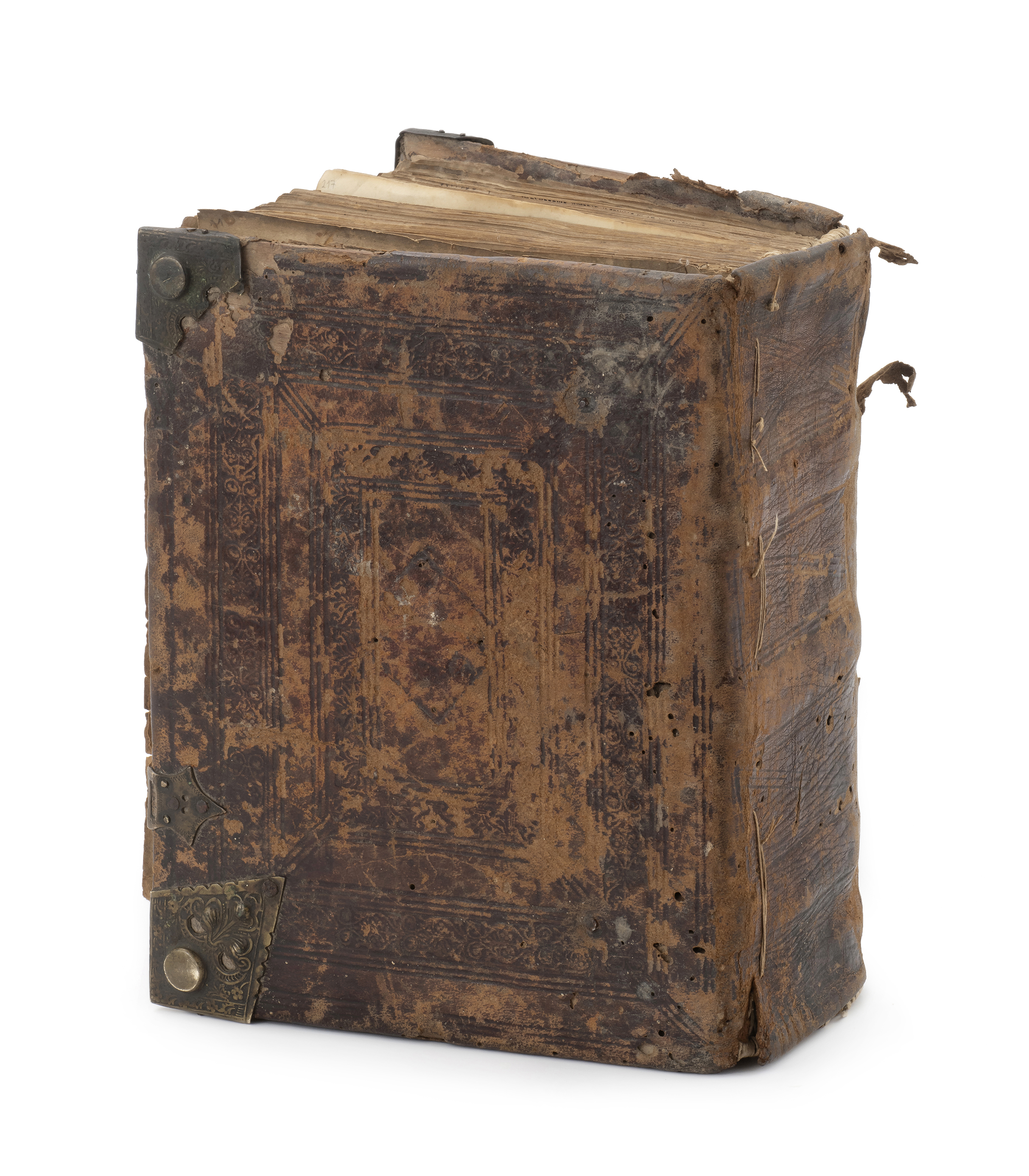
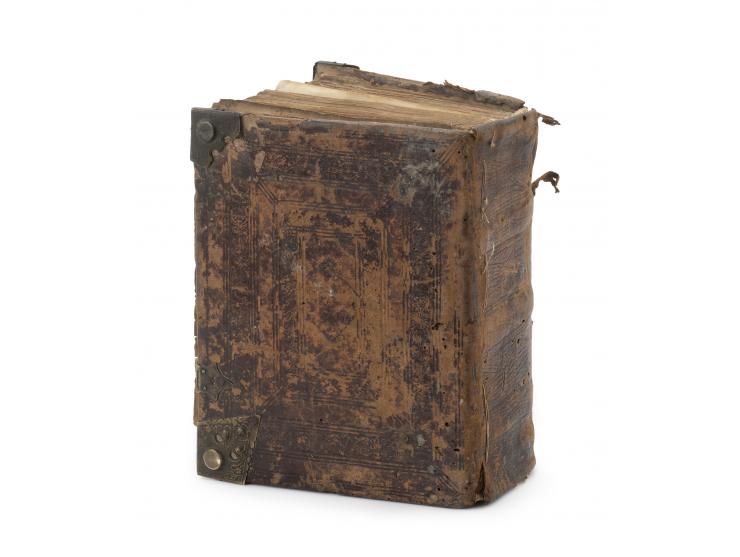
356 parchment leaves. Collation: i-xiii8, xiv3, xv-xix8, xx2, xxi4, xxii-xxix8, xxx2, xxxi-xxxiii8, xxxiv9, xxxv8, xxxvi5, xxxvii-xxxviii8, xxxix4, xl-xlvii8, xlviii7 (lacking last leaf of final gathering). Parchment ruled and dotted for neatness of writing and straightening of lines. Size of leaves: 18X23 cm. Varying condition of leaves. Significant defects to some leaves in first nine gatherings, tears and open tears, affecting text and illustrations. First three leaves of first gathering lacking, replaced with three parchment leaves at a later date. Parchment replacement to several leaves, with replacement of affected text in several places. Most other leaves of volume in fair-good condition. Stains, including dark stains. Wear and creases. Tears to several leaves. Stitches and parchment repairs to several leaves throughout volume. Text affected in several places. Fading or erasure of ink in some places, including to some illustrations. Margins trimmed, affecting decorated catchwords as well as some illustrations and decorations at tops of pages. On several leaves, a few marginal glosses and additions affected. Early leather binding, with metal corners and remains of metal clasps. Various defects to binding.
The manuscript is currently in Zurich, Switzerland, and will be available for preview by appointment through Kedem’s office.